
Johnson & Johnson Diversity and Inclusion: What It Means for Workplace Safety Leaders
Johnson & Johnson frames diversity and inclusion as part of a broader commitment to its workforce, not a standalone program. The company says its Credo inspires a deep responsibility to employees around the world, and that it aspires to attract, retain, support and develop the healthiest workforce. It also says it’s committed to helping its people thrive at work and at home. With more than 130,000 global employees, that’s a large population to support.
The company’s leadership message is direct: it can only solve the world’s toughest health challenges when employees can perform at their best. For Canadian occupational health and safety professionals, that framing matters because it links inclusion to wellbeing, performance and safe, supportive workplaces, the same ground you cover daily.
One caution before you go further. Johnson & Johnson hasn’t published Canada-specific program details that we can verify, so this article sticks to what the company has actually said and flags where Canadian specifics remain unconfirmed. Below, we break down what the commitment is, what the company says it does, who it’s meant to serve, and how safety managers, HR teams and consultants can engage with it. You’ll also find practical takeaways you can apply to your own workplace, along with a summary table and answers to common questions.
Johnson & Johnson’s Approach to Diversity and Inclusion: What It Is

Johnson & Johnson describes its approach to diversity and inclusion as an extension of its Credo, the company’s founding statement of responsibilities. According to the company, the Credo inspires a deep responsibility to employees around the world, and that responsibility shapes how it thinks about its workforce. J&J says it aspires to attract, retain, support and develop the healthiest workforce, and that it is committed to helping its people thrive at work and at home.
Scale matters here. J&J reports more than 130,000 global employees, which is a company-reported figure. Any approach applied across a workforce that size has to be built into everyday management and culture, not left to a single team.
Notice how the company frames it. Diversity and inclusion is not presented as a standalone initiative. It sits inside a broader message about well-being and performance. J&J says it can only solve the world’s toughest health challenges when its employees can perform at their best. For safety and HR professionals, that connection is the useful part: inclusion is treated as a condition for good work, not an add-on.
Two terms are worth defining in plain language:
– Inclusion means people from different backgrounds are able to take part fully, have their input heard, and get fair access to support and opportunity, not just be present on a headcount.
– Psychological safety means workers feel able to speak up, ask questions, or report a concern without fear of embarrassment or punishment.
These definitions link directly to workplace safety. When people feel included and psychologically safe, they are more likely to raise hazards, report near misses, and ask for help before a problem becomes an incident.
CEO Perspectives on Diversity and Inclusion: Why Leadership Voice Matters
When a company’s leadership talks about diversity and inclusion, it does more than share a viewpoint. Executive messaging sets expectations, signals what the organization actually prioritizes, and gives managers permission to act. If you want a sense of how this plays out across employers, CEO Perspectives D&I offers a useful look at building equitable workplaces and meeting obligations.
Johnson & Johnson states that it can only solve the world’s toughest health challenges when its employees can perform at their best. That is a performance argument as much as a values one. People perform best when they feel they belong, can speak up, and expect to be taken seriously when they do.
That connection matters for safety. Think about what it takes to report a hazard or a near miss. A worker has to believe the report will be received fairly, without ridicule or retaliation. In workplaces where some people feel like outsiders, whether because of language, background, role, or tenure, those reports often go unmade. Inclusion is not separate from your safety culture. It is one of the conditions that makes it work.
For safety managers and HR professionals, the practical takeaway is to look at how leadership talks about people, then check whether the front line experiences the same message. A few questions can help:
– Do leaders explain why employee performance and well-being are linked to the organization’s goals?
– Do workers across roles and backgrounds feel safe raising concerns?
– Are near-miss and hazard reports coming from all parts of the workforce, or only some?
A word on sources. When you study a company’s position, rely on what it has actually published, such as its Credo and its public communications, including the one dated January 30, 2026. Treat those documents as the boundary of what you can say. They tell you what the company states, not how every program operates in practice, and they should not be stretched into claims about specific executives or local programs that the documents do not make. For Canadian-specific details, contact the company directly.
What Johnson & Johnson Does to Support Its Workforce
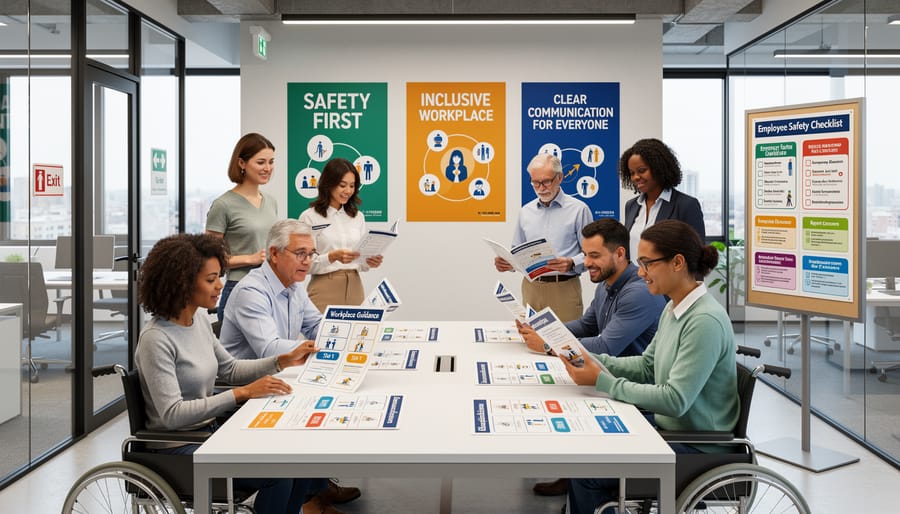
Johnson & Johnson describes its workforce commitments in fairly plain terms. The company says its Credo inspires a deep responsibility to employees around the world, and that it aspires to attract, retain, support and develop the healthiest workforce. It also says it is committed to helping its people thrive at work and at home, and that it can only solve the world’s toughest health challenges when employees can perform at their best.
Those are statements of intent, not program descriptions. The research behind this article did not confirm any Canada-specific programs, so readers who want local detail should ask the company directly rather than assume anything.
For an OHS-minded employer, though, each stated commitment raises practical questions you can put to your own workplace:
| Stated commitment | What it signals | Questions a Canadian employer could ask about it |
|---|---|---|
| Attract and retain | Workforce stability is treated as a priority | Do our hiring and exit data show who stays, and who leaves, and why? |
| Support and develop | Ongoing investment in people, not just recruitment | Do all workers have fair access to safety training and career development? |
| Thrive at work and at home | Well-being extends beyond the job site | What supports exist for mental health, fatigue and work-life balance? |
| Perform at their best | Performance is linked to how employees are treated | Do workers feel safe enough to report hazards and near misses? |
Read this way, the commitments map neatly onto what safety managers already care about. Support and development are not far from competent supervision and proper training. Well-being at work and at home touches on psychological health and fatigue, both of which can affect incident rates.
Legal duties still set the floor. In Ontario, for example, the Ontario OHSA requires employers to take reasonable precautions to protect workers, and a values statement does not replace that. What a company’s stated commitments can do is prompt you to ask whether your own practices go beyond compliance and genuinely help people do their jobs well and safely.
Who Can Learn From This: Safety Managers, HR Teams, and Consultants
Johnson & Johnson says its Credo inspires a deep responsibility to employees around the world, and that it aspires to attract, retain, support and develop the healthiest workforce. That framing is useful well beyond a company with more than 130,000 employees, because the underlying idea is simple: people who are supported tend to perform better, and that includes performing safely.
Three groups in the Canadian OHS sector stand to gain the most from understanding it. Safety managers can see inclusion as part of hazard reporting, since workers who feel they belong are more likely to speak up about near misses. HR professionals can treat inclusion as a retention and well-being lever rather than a separate initiative. Consultants can use it as a reference point when advising clients on culture.
Here is what each role can do with that insight:
- Safety managers: run inclusive toolbox talks where every crew member has a real chance to raise concerns, and check that incident-reporting steps are easy for everyone to use.
- HR professionals: audit who gets access to safety training and development, and tie well-being supports to retention goals.
- Consultants: help clients assess whether their safety communications reach the whole workforce, not just the loudest voices.
- Supervisors: invite quieter team members to weigh in during pre-shift briefings and follow up on what they say.
Whatever your role, a few practices apply across the board. Make safety communications accessible by using plain language, clear visuals and readable formats. Offer training materials in the languages your workforce actually speaks, and confirm that people understood them, not just that they received them. Finally, keep access to development fair and visible, so advancement into safety leadership does not depend on who happens to be noticed.
How to Engage: Putting Inclusive Leadership Into Practice at Your Workplace

Start with the source material. Read Johnson & Johnson’s public Credo and its employee-related communications, including the January 2026 statement, so your starting point is what the company actually says. It describes a deep responsibility to employees worldwide and an aspiration to attract, retain, support and develop the healthiest workforce. Then benchmark your own commitments against that language. Does your organization back up its words on well-being, development and performance with practices people can see?
Next, start a leadership conversation. Ask your executive team how inclusion connects to the safety outcomes you already track. Then build it into the systems you control. Invite varied voices onto your safety committee, check that incident-reporting channels are accessible to every shift and language group, and make sure people can raise concerns without worry. Your duties under Labour Code Part II are a sound framework for that work, since consultation and hazard reporting only function when everyone feels able to take part.
Does J&J publish Canada-specific D&I programs?
Our research did not confirm any Canada-specific programs, so we make no claims about them. Contact the company directly for local details.
How does inclusion connect to occupational health and safety?
When people feel included, they are more likely to report hazards and near misses. That gives safety committees better information to act on.
How can a small employer apply these ideas?
Start small: hold short, accessible toolbox talks, offer safety materials in the languages your crew speaks, and ask every worker for input on hazards.
Where can readers find current safety and HR job listings?
Browse the industry-relevant job listings in this publication if you are building or joining a safety or HR team focused on inclusive workplaces.
Finally, if you need Canada-specific information from Johnson & Johnson, ask the company directly rather than assuming. Questions about programs, supports or policies in this country are best answered at the source.
Johnson & Johnson’s published position is straightforward: its Credo creates a deep responsibility to employees, and the company says it can only solve the world’s toughest health challenges when people are able to perform at their best. For safety and HR leaders, the useful lesson is that this kind of leadership commitment to inclusion supports the conditions for safer workplaces, such as honest hazard reporting, accessible training and fair access to development.
That said, a global statement is not a local program. The company’s materials don’t confirm Canada-specific details, so verify those directly with the company before citing or benchmarking against them.
Your next step: choose one inclusion commitment from your own workplace, such as multilingual safety training or a more open near-miss reporting process, and raise it at your next safety committee meeting. For more practical guidance, explore our related articles and current job listings for safety and HR professionals on this site.