
What Is the Ontario OHSA (and How Does It Apply to High-Risk Industries)?
The Ontario Occupational Health and Safety Act (OHSA) is the foundational legislation that establishes workplace safety rights, duties, and enforcement mechanisms for employers, supervisors, and workers across the province. Enacted in 1979 and continuously updated to reflect emerging hazards and industry practices, the OHSA sets minimum standards for workplace health and safety and empowers the Ministry of Labour, Immigration, Training and Skills Development to inspect, investigate, and enforce compliance.
For professionals in high-risk sectors like construction, manufacturing, mining, and healthcare, understanding how the OHSA applies to your operations isn’t optional. The Act’s framework directly shapes daily practices, from hazard assessments and incident reporting to training requirements and emergency preparedness. Violations can trigger work stoppages, fines exceeding $1.5 million for corporations, and even criminal prosecution in cases of serious injury or death.
What makes the OHSA particularly complex is its layered structure. The Act itself establishes broad principles and enforcement powers, while sector-specific regulations spell out detailed technical requirements. A manufacturing supervisor needs to navigate different compliance obligations than a hospital administrator, even though both operate under the same legislative umbrella.
This guide breaks down how the OHSA operates in 2026, examining its core components, the rights and duties it creates, and how regulations translate into actionable compliance steps for your specific industry. Whether you’re developing a safety program from scratch, preparing for a Ministry inspection, or verifying that current practices meet legislative standards, you’ll find practical direction grounded in the Act’s current requirements.
What the Ontario OHSA Means for Workplaces
The Ontario Occupational Health and Safety Act is provincial legislation that sets out the rights and duties of all parties in a workplace. It provides the legal framework for protecting workers from harm and establishing minimum safety standards that employers must meet. Passed in 1979 and updated regularly, the Act carries the force of law, meaning non-compliance can result in orders, fines, or criminal prosecution.
OHSA applies to most workplaces and workers in Ontario, including full-time, part-time, temporary, and contract employees. It covers private companies, crown corporations, municipalities, and many public sector organizations. Exceptions include federally regulated industries (airlines, banks, telecommunications, interprovincial transportation) and some farm operations where only immediate family members work. If you work in Ontario and your employer isn’t federally regulated, you’re almost certainly covered.
The Act’s purpose is simple: prevent workplace injuries, illnesses, and deaths. It does this by mandating baseline protections, hazard assessments, training, protective equipment, safe work procedures, and by giving workers enforceable rights to participate in their own safety. Rather than relying solely on inspectors, the OHSA embeds safety responsibilities at every level of the workplace.
Central to the Act is the Internal Responsibility System, a philosophy holding that workplace parties, employers, supervisors, workers, share the duty to identify and control hazards. The IRS assumes those closest to the work are best positioned to spot risks and solve problems. It’s not a regulatory burden passed down from above; it’s a partnership where everyone plays a role in maintaining a safe environment.
- Internal Responsibility System
- The foundational principle that workplace health and safety is a shared responsibility among all parties at the worksite. It requires active cooperation and communication between employers, supervisors, and workers to identify and address hazards.
- Workplace Party
- Any person or entity with duties under the OHSA, including employers, constructors, supervisors, workers, owners, suppliers, and officers of a corporation. Each party has specific legal obligations designed to protect worker health and safety.
- Competent Person
- An individual who is qualified through knowledge, training, and experience to organize work and its performance, identify hazards, and take corrective action. Competency is situation-specific and must match the complexity of the task.
- Constructor
- The person or company responsible for overall coordination and management of a construction project, including health and safety on site. The constructor ensures all regulations are followed and that contractors comply with the OHSA.
- Critical Injury
- An injury that places life in jeopardy, produces unconsciousness, results in substantial loss of blood, involves a fracture of a leg or arm (but not a finger or toe), causes amputation, consists of burns to a major portion of the body, or causes loss of sight in an eye. Critical injuries must be reported to the Ministry immediately.
Understanding these fundamentals is essential before examining how the Act operates in high-risk settings, where the stakes are highest and compliance demands are most stringent.
How the OHSA Works in Practice

Rights and Responsibilities Under the Act
The OHSA establishes workers’ three core rights as the foundation of Ontario’s occupational health and safety system. The right to know means workers must be informed about hazards, trained on safe procedures, and given access to safety data sheets and other critical information. The right to participate allows workers to take part in workplace safety through joint health and safety committees, inspections, and raising concerns without reprisal. The right to refuse unsafe work protects workers who believe a task poses danger to themselves or others, triggering an investigation process that escalates through supervisors, the JHSC, and potentially Ministry inspectors.
These rights create corresponding duties. Employers bear the broadest obligations under the Act, including:
- Ensure equipment, materials, and protective devices are maintained in good condition
- Provide information, instruction, and supervision to protect worker health and safety
- Appoint competent supervisors and ensure they carry out their duties
- Prepare and review written occupational health and safety policies
- Acquaint workers and supervisors with hazards and provide training on proper precautions
- Take every reasonable precaution to protect workers
Supervisors must ensure workers use required protective equipment, follow safe procedures, and are aware of hazards. They act as the critical link between management directives and frontline safety. Workers themselves have a duty to use protective equipment, work safely, report hazards and defective equipment, and not endanger others.
In high-risk industries, these duties intensify. Construction supervisors must verify fall protection daily. Healthcare employers must implement violence prevention programs. Mining operations require continuous hazard assessment as conditions change. The Internal Responsibility System means everyone from the CEO to the newest worker shares accountability for creating a safe workplace, with duties escalating based on authority and control.
Key Components of the OHSA Framework
Critical Regulations for High-Risk Industries
The Ontario OHSA operates through a system of sector-specific regulations that translate the Act’s broad principles into enforceable standards. For high-risk industries, several regulations establish detailed requirements that go far beyond general workplace safety rules.
Construction Projects (O. Reg. 213/91) applies to all construction work in Ontario, including renovation, repair, and demolition. This regulation covers fall protection systems, scaffolding standards, excavation requirements, and traffic control on construction sites. It applies whenever construction activity occurs, regardless of the project’s size or duration. The regulation mandates specific competencies for supervisors, detailed safety plans for complex projects, and strict equipment inspection schedules.
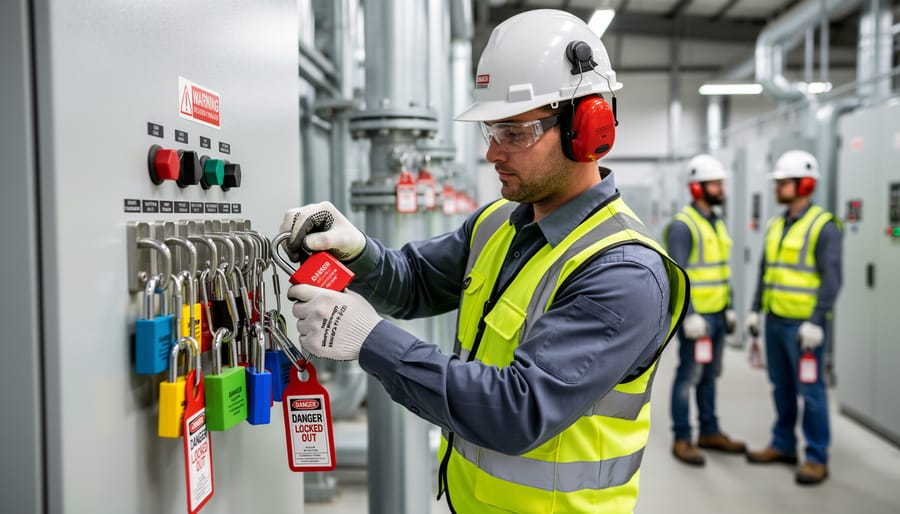
Industrial Establishments (O. Reg. 851) governs manufacturing facilities, warehouses, processing plants, and similar workplaces. It addresses machine guarding, lockout procedures, material handling equipment, noise exposure, and ventilation requirements. This regulation applies to factories, mills, and workshops where goods are manufactured, assembled, or processed. The confined space provisions under this regulation set rigorous entry procedures and atmospheric testing protocols.
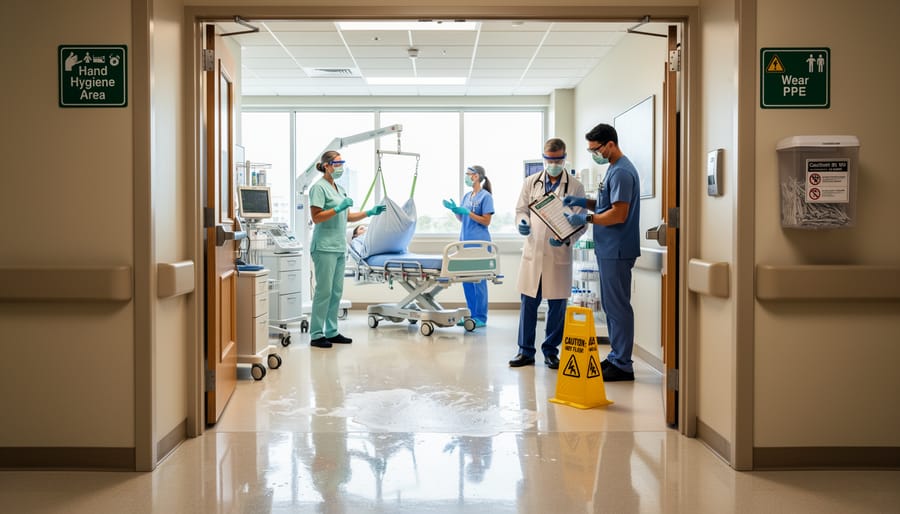
Health Care and Residential Facilities (O. Reg. 67/93) targets hospitals, long-term care homes, clinics, and similar settings. It includes specific requirements for violence and harassment prevention programs, patient handling equipment, needle safety devices, and biological hazard controls. This regulation applies wherever health care services are delivered or residential care is provided.
Mines and Mining Plants (O. Reg. 854) establishes comprehensive safety standards for underground mining, surface mining, and ore processing facilities. It covers ground control, ventilation, haulage systems, explosives handling, and emergency response capabilities. The regulation applies to all mining operations in Ontario, from exploration sites to active production mines.
The Designated Substance Regulations (covering asbestos, lead, silica, and other hazardous materials) apply across industries whenever workers may be exposed to these substances. These regulations require exposure assessments, control programs, medical surveillance, and specialized training regardless of your sector.
Additional regulations address specific hazards: X-Ray Safety (O. Reg. 861) for medical and industrial radiography, Diving Operations (O. Reg. 629/94) for underwater work, and Window Cleaning (O. Reg. 859) for exterior building maintenance. Understanding which regulations apply to your operations is the first step toward building a compliant safety program.
How the OHSA Applies to High-Risk Workplaces
Joint Health and Safety Committees in High-Risk Settings
In high-risk industries, Joint Health and Safety Committees serve as the practical machinery of the Internal Responsibility System, translating the OHSA’s principles into workplace-level action. Any Ontario workplace with 20 or more workers must establish a JHSC, with worker representatives comprising at least half the committee. One worker member and one management member must hold valid certification, earned through Ministry-approved training programs that cover hazard recognition, inspection techniques, and investigation procedures.
The committee’s core duties include monthly workplace inspections, or more frequently if the hazard profile demands it, covering different areas on a rotating basis to ensure comprehensive coverage over time. In construction, this might mean inspecting scaffolding systems one month and electrical installations the next. Manufacturing JHSCs often focus on machine guarding, lockout procedures, and material handling zones during their walkthroughs.
Certified members lead incident investigations, examining both injuries and near misses to identify root causes and recommend corrective actions. The committee reviews inspection reports, tracks hazard trends, and makes written recommendations to the employer, who must respond in writing within 21 days. In mining operations, JHSCs play an expanded role, meeting at least monthly and addressing sector-specific hazards like ground control and ventilation.
Meeting minutes must be posted and retained for at least two years, creating an auditable record of safety discussions and employer responses. In practice, effective JHSCs in high-risk settings go beyond minimum requirements, analyzing injury data, reviewing training gaps, and driving continuous improvement initiatives that reduce workplace harm.
Practical Applications: Meeting OHSA Requirements
Training and Certification Essentials
The OHSA and its regulations mandate specific training to ensure workers and supervisors understand their rights, duties, and how to work safely. All workers new to a workplace must receive basic health and safety awareness training covering workplace hazards, rights under the Act, and procedures for reporting unsafe conditions. This foundational training happens before starting work.
Supervisors carry additional responsibilities, so the Act requires them to demonstrate competency in recognizing hazards, implementing controls, and enforcing safe work practices. Many employers formalize this through supervisor safety training programs, though the OHSA doesn’t prescribe a specific course, it demands proven competence.
Certified members of joint health and safety committees must complete Ministry-approved certification training, typically a two-part program spanning several days. This certification equips them to conduct workplace inspections, investigate incidents, and identify hazards effectively. Certification doesn’t expire, but recertification is recommended every three years to stay current.
High-risk activities require specialized certifications. Workers performing tasks at heights above three metres need working at heights training, valid for three years. Confined space entrants and attendants require entry-specific training before accessing permit-required spaces. Powered mobile equipment operators, including forklift drivers, must hold valid certifications demonstrating both theoretical knowledge and practical competence. Most equipment certifications require renewal every three to five years, depending on the training provider and workplace policy.
Employers must maintain training records documenting what training workers received, when they completed it, and when certifications expire. These records prove due diligence during Ministry inspections and help track when refresher training becomes necessary.
Common Questions About Ontario OHSA Compliance
What happens during a Ministry of Labour inspection?
An inspector can arrive unannounced, examine workplaces, review records, interview workers and management, and issue orders requiring immediate or time-limited corrective action. Inspectors have broad authority under the OHSA to investigate compliance and can stop work if they identify imminent danger.
When can a worker legally refuse unsafe work?
A worker can refuse work if they have reason to believe the work is dangerous to themselves or another worker. The refusal triggers a formal investigation process involving the supervisor, a worker representative or JHSC member, and potentially a Ministry inspector if the issue remains unresolved.
What are the penalties for OHSA violations?
Penalties vary by severity: fines for individuals can reach $100,000 and up to 12 months imprisonment for each violation, while corporations face fines up to $1.5 million per offence. Serious violations, particularly those resulting in injury or death, often lead to prosecution and substantial fines alongside public disclosure.
Do federal and provincial OHSA requirements overlap?
Federally regulated workplaces (banks, telecommunications, interprovincial transport) fall under the Canada Labour Code, not Ontario’s OHSA. Most Ontario workplaces, including construction, manufacturing, mining, and healthcare, are provincially regulated and must comply exclusively with the OHSA and its regulations.
Where can employers find compliance support and resources?
The Ministry of Labour website offers regulations, guidelines, fact sheets, and health and safety alerts. Sector-specific Infrastructure Health and Safety Associations (IHSAs) provide training, consulting, and toolkits tailored to construction, manufacturing, healthcare, and other high-risk industries.
Understanding these compliance fundamentals helps employers anticipate regulatory interactions and take proactive steps before issues escalate. Ministry inspectors focus on systemic hazards, repeat violations, and injury-prone activities, so maintaining current documentation, visible training records, and active JHSC participation strengthens your defence against orders or charges. If an order is issued, timely compliance and clear communication with inspectors demonstrate good faith and reduce the likelihood of further enforcement action.
For workplaces navigating complex multi-jurisdictional projects or overlapping regulations, consulting a qualified health and safety professional ensures you’re meeting all applicable requirements. The OHSA’s framework is broad by design, and sector-specific regulations add layers of detail that demand expert interpretation, particularly in high-risk environments where non-compliance carries both legal and human costs.
The Ontario OHSA stands as the cornerstone of workplace safety across the province, and its role becomes even more critical in high-risk industries where the consequences of non-compliance can be severe. Construction sites, manufacturing facilities, healthcare settings, and mining operations all operate under a framework designed to protect workers through clear legal obligations and a culture of shared responsibility.
Success in these environments requires more than checking regulatory boxes. Employers, supervisors, and workers each play distinct roles in the Internal Responsibility System, and when all parties fulfill their duties, workplaces become measurably safer. Proactive compliance means anticipating hazards rather than reacting to incidents, investing in comprehensive training programs, and maintaining robust documentation that demonstrates due diligence.
The regulatory landscape continues to evolve. Amendments to existing regulations, new designated substances, and updated enforcement policies emerge regularly. Safety professionals who stay current with these changes position their organizations ahead of compliance requirements rather than scrambling to catch up after inspections or incidents.
The Ministry of Labour, Immigration, Training and Skills Development offers extensive resources, guidance documents, fact sheets, online tools, and consultation services, to support compliance efforts. Joint health and safety committees bring worker perspectives into safety planning, creating solutions that reflect frontline realities.
Workplace safety is not a destination but an ongoing commitment. Every shift presents opportunities to strengthen safety culture, refine procedures, and demonstrate that protecting workers remains the priority in Ontario’s high-risk industries.