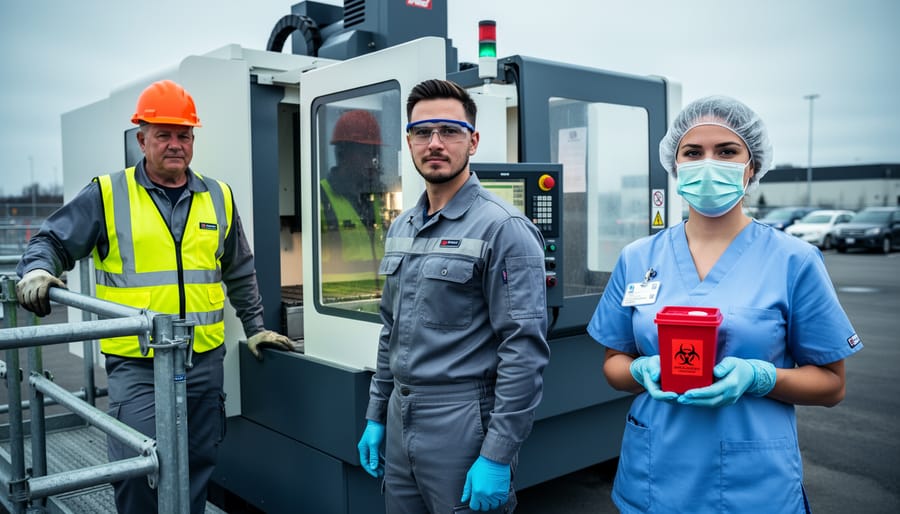
High Risk Industries That Need the Most Rigorous Safety Standards
High risk industries in Canada expose workers to elevated dangers that require specialized safety protocols and comprehensive protective measures. In 2026, identifying these sectors remains critical for organizations developing targeted health and safety programs that address sector-specific hazards.
Understanding which industries carry the highest workplace risks starts with examining injury statistics, fatality rates, and lost-time claim data. Construction, manufacturing, transportation, forestry, and healthcare consistently top the list, each presenting distinct hazards that demand tailored safety approaches. The construction sector faces falls from heights, struck-by incidents, and electrical hazards. Manufacturing environments expose workers to machinery entanglement, chemical exposures, and repetitive strain injuries. Transportation workers contend with vehicle collisions, cargo handling injuries, and fatigue-related incidents.
Forestry operations deal with falling trees, chainsaw accidents, and remote location challenges that complicate emergency response. Healthcare professionals encounter needlestick injuries, workplace violence, and exposure to infectious diseases. These industries share common threads: physically demanding work, exposure to hazardous materials or environments, and operational pressures that can compromise safety when not properly managed.
The financial and human costs of workplace incidents in these sectors drive regulatory scrutiny and insurance requirements. Organizations operating in high-risk industries face higher workers’ compensation premiums, more frequent safety inspections, and stricter compliance obligations under occupational health and safety legislation. Beyond regulatory compliance, effective safety programs protect your workforce, reduce operational disruptions, and strengthen your organization’s reputation.
Assessing your industry’s risk profile requires examining both frequency and severity of potential incidents. This foundation allows safety professionals to prioritize hazard controls, allocate resources effectively, and build programs that protect workers while supporting operational goals.
What Makes an Industry High Risk
An industry earns the “high risk” designation when its workers face measurably elevated chances of injury, illness, or death compared to the broader Canadian workforce. Three primary metrics determine this classification: lost-time injury frequency rates, occupational fatality statistics, and documented exposure to hazardous conditions.
WorkSafeBC and other provincial compensation boards track lost-time injuries per 200,000 hours worked as a standardized measure. When an industry consistently reports rates above 3.0 per 200,000 hours, it signals systemic hazards requiring enhanced safety protocols. Construction, for instance, maintained a rate of 3.8 in recent provincial data, while mining operations in certain provinces exceeded 4.5.
Fatality rates tell a more severe story. Industries where workers die on the job at rates exceeding the national average of roughly 2.5 per 100,000 workers face immediate regulatory scrutiny. Logging operations historically report fatality rates fifteen times higher than this benchmark, with individual provinces recording rates above 35 per 100,000 workers in 2025 data.
Beyond statistics, regulators assess the nature and frequency of hazardous exposures. Work environments involving fall hazards above three meters, confined spaces, exposure to carcinogens, or operation of heavy mobile equipment automatically trigger enhanced safety requirements. Industries combining multiple exposure categories face compounded risk profiles.
Canadian jurisdictions also consider secondary indicators: the severity of typical injuries, the presence of long-term occupational diseases, and psychological hazards including workplace violence. Healthcare, though not traditionally classified as physically dangerous, now appears on high risk lists due to elevated assault rates and chronic strain injuries affecting nursing staff.
The classification matters because it determines inspection frequencies, required safety certifications, insurance premium calculations, and the mandatory safety equipment standards employers must meet. A high risk designation isn’t arbitrary; it reflects documented harm patterns that demand proactive prevention rather than reactive response.
The Five Highest Risk Industries in Canada
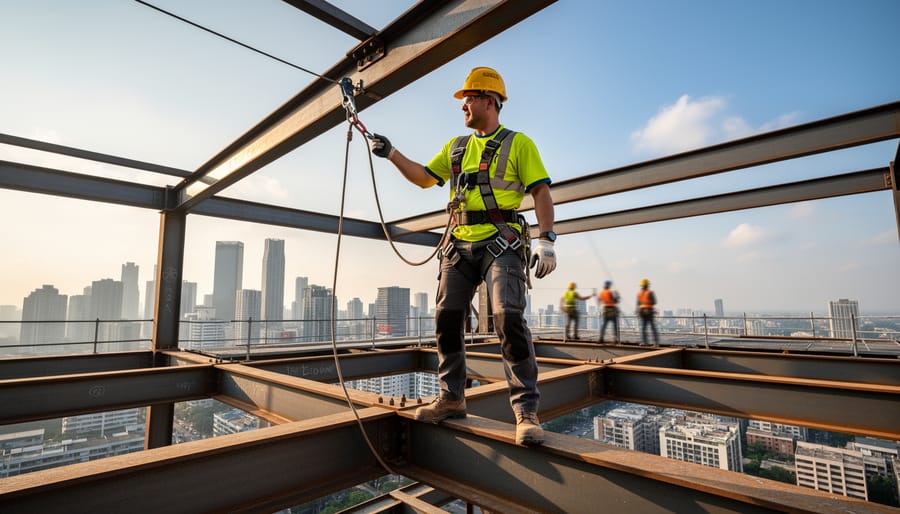
Construction and Heavy Industrial Work
Construction consistently ranks among the most perilous sectors in Canada, with workers facing a convergence of fall risks, equipment-related injuries, and environmental hazards daily. Falls from heights account for roughly one-third of construction fatalities, occurring from scaffolding, ladders, roofs, and unprotected edges. Even falls from relatively low heights, under three metres, can result in severe injuries or death.
Heavy equipment presents another critical danger. Workers operate near cranes, forklifts, excavators, and other machinery in congested sites where visibility is limited and multiple trades work simultaneously. Struck-by incidents involving moving equipment or falling materials cause numerous serious injuries each year.
Environmental exposures compound these risks. Construction workers face extreme temperatures, both heat stress in summer and hypothermia in winter, along with exposure to silica dust, asbestos in renovation projects, and hazardous chemicals. The transient nature of construction sites means hazards change rapidly as projects progress, requiring constant vigilance and frequent safety reassessments. Weather conditions further complicate work, with rain, ice, and wind creating additional fall and equipment hazards that can emerge without warning.
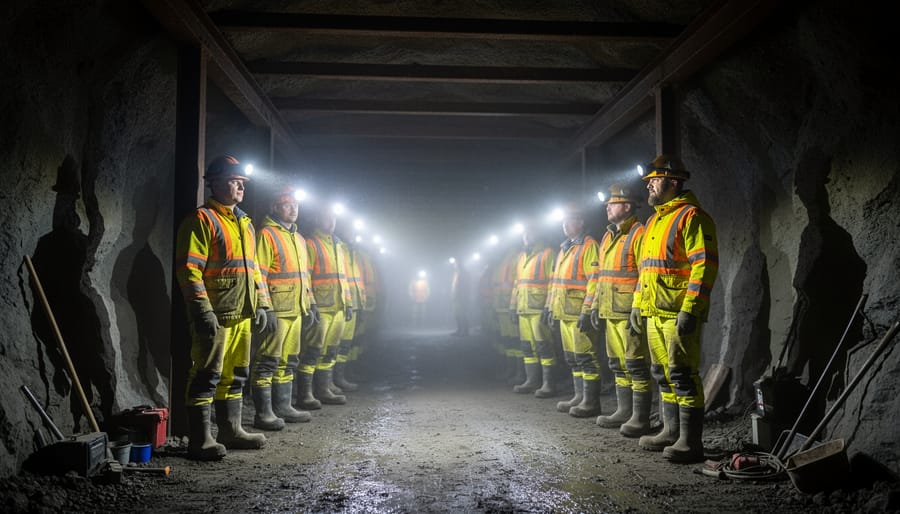
Mining and Resource Extraction
Mining operations face some of the most dangerous conditions found in any Canadian workplace. Underground miners work in confined spaces where oxygen levels fluctuate, toxic gases accumulate, and the constant risk of cave-ins threatens every shift. The combination of heavy machinery, explosive materials, and unpredictable geological conditions creates a hazard profile unlike any other sector.
Equipment-related incidents remain a leading cause of serious injuries. Haul trucks, loaders, and drilling rigs operate in cramped underground tunnels with limited visibility and poor lighting. Workers navigate uneven surfaces while managing machinery that can weigh hundreds of tons. Ground control failures, rock bursts, and structural collapses add layers of complexity that surface industries never encounter.
Resource extraction sites often sit in remote locations, meaning emergency response times stretch considerably longer than urban workplaces. This isolation magnifies every risk. A minor injury can become life-threatening when the nearest trauma centre requires helicopter transport. The physical demands of the work, combined with shift patterns that disrupt circadian rhythms, contribute to fatigue-related accidents that compound the inherent dangers of mining environments.
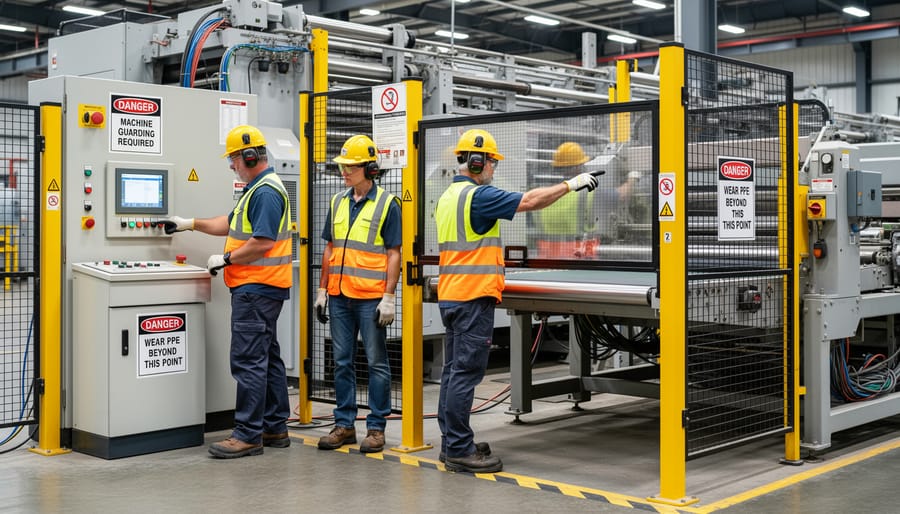
Manufacturing and Industrial Processing
Manufacturing facilities in Canada face a unique combination of mechanical, chemical, and ergonomic hazards that contribute to thousands of workplace injuries annually. Assembly lines, industrial machinery, and automated systems create constant exposure to moving parts, pinch points, and crushing hazards. Workers operating stamping presses, conveyor systems, or robotic equipment risk severe injuries from machinery malfunctions or improper lockout procedures.
Chemical exposures present another significant risk, particularly in facilities handling solvents, adhesives, metal treatments, or industrial cleaners. Inadequate ventilation systems can lead to respiratory issues, while skin contact with corrosive substances causes burns and dermatitis. Many manufacturing workers develop chronic conditions from years of exposure to airborne particulates, dust, and toxic fumes.
Repetitive strain injuries affect workers across most manufacturing operations, from packaging lines to precision assembly work. Tasks requiring constant overhead reaching, forceful gripping, or repetitive motions lead to musculoskeletal disorders that develop gradually but can become debilitating. Noise-induced hearing loss remains prevalent in facilities with heavy machinery, metal fabrication, or high-speed production equipment running continuously throughout shifts.
Forestry and Logging Operations
Forestry and logging rank among Canada’s deadliest sectors, with fatality rates substantially higher than most other industries. Workers face a unique convergence of risks: isolation from immediate medical help, massive falling trees, and chainsaw operations that leave little margin for error. Ground conditions shift unpredictably, rain-soaked slopes, hidden obstacles, and unstable terrain amplify the danger of heavy equipment rollovers and struck-by incidents.
The remoteness of logging sites compounds every hazard. When accidents occur, emergency response times stretch from minutes to hours, transforming injuries that might be survivable in urban settings into fatal outcomes. Falling trees and branches cause nearly half of all logging fatalities, while equipment-related incidents, particularly from feller bunchers and skidders, account for most remaining deaths.
Weather patterns introduce constant variability. High winds can redirect falling timber without warning, while winter ice obscures footing and summer heat exhaustion impairs judgment during physically demanding work. Unlike controlled industrial environments, forestry workers contend with conditions that change hourly, requiring constant hazard reassessment and adaptive safety measures that account for both mechanical and environmental threats simultaneously.
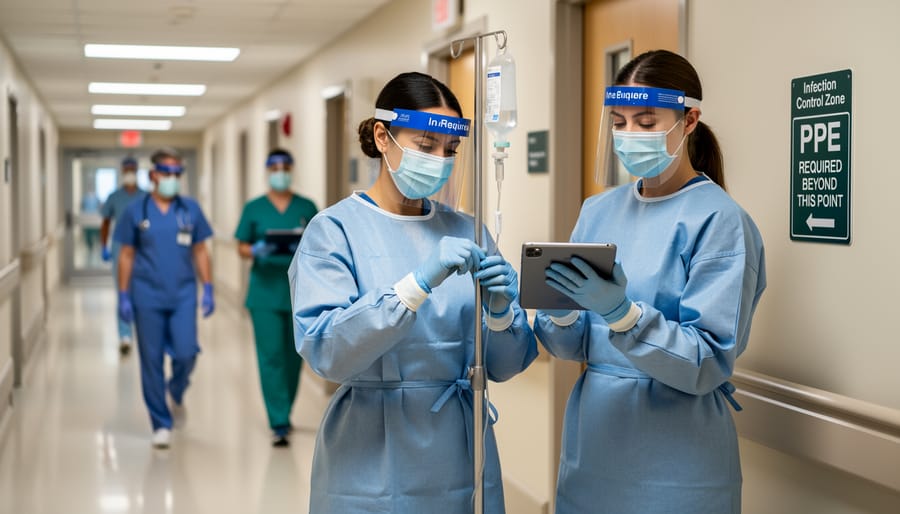
Healthcare and Emergency Services
Healthcare and emergency services consistently rank among Canada’s most hazardous industries despite public perception of relatively safe indoor work environments. Healthcare workers face a unique combination of biological exposures, physical demands, and violent incidents that distinguish this sector from traditional industrial settings.
Biological hazards present constant risk through exposure to infectious diseases, bloodborne pathogens, and drug-resistant organisms. Emergency responders and hospital staff routinely encounter unknown pathogens during patient care, particularly during disease outbreaks. Needlestick injuries alone affect thousands of Canadian healthcare workers annually, creating potential exposure to hepatitis and HIV.
Workplace violence represents the fastest-growing hazard in healthcare settings. Emergency department staff, psychiatric care workers, and paramedics experience physical assaults, verbal abuse, and threatening behaviour at rates far exceeding most other professions. Security measures and de-escalation training have become standard requirements rather than optional precautions.
Physical strain from patient handling, extended shifts, and awkward working positions contributes to high rates of musculoskeletal injuries. Nurses and personal support workers frequently suffer back injuries despite mechanical lift equipment availability. Night shift rotations and chronic understaffing compound fatigue-related risks, affecting both worker safety and patient care quality throughout 2026.
Essential Safety Equipment Requirements Across High Risk Industries
Regardless of the specific sector, workers in high risk industries require multi-layered protection that addresses both common hazards and industry-specific dangers. Canadian occupational health and safety regulations mandate comprehensive equipment standards, though requirements vary by province and workplace type.
At minimum, every high risk workplace must provide head protection meeting CSA Z94.1 standards, including hard hats rated for electrical hazards in construction and mining, and bump caps in manufacturing settings where overhead clearance is limited. Eye and face protection becomes critical in environments with flying debris, chemical splashes, or intense light, construction workers need impact-resistant safety glasses, welders require specific shade ratings, and healthcare workers handling biological materials must use face shields that protect mucous membranes.
Respiratory protection demands careful selection based on hazard assessment. Construction and mining operations often require P100 filters for particulate matter, while manufacturing workers exposed to chemical vapours need cartridge respirators matched to specific contaminants. Healthcare facilities must stock N95 respirators for airborne pathogens, with fit testing conducted annually to ensure proper seal. Confined space work in any sector requires supplied-air respirators and continuous atmospheric monitoring.
Fall protection systems become mandatory at heights exceeding three metres in most Canadian jurisdictions, though some provinces require protection at lower elevations. Full-body harnesses with shock-absorbing lanyards represent the baseline, but construction sites increasingly use self-retracting lifelines and horizontal lifeline systems. Forestry operations require specialized climbing equipment meeting arborist standards, while maintenance work often needs mobile scaffold systems with integrated fall arrest.
Hand protection varies dramatically by industry. Construction workers rotate between cut-resistant gloves for material handling, chemical-resistant options for concrete work, and impact-resistant styles for demolition. Manufacturing requires gloves rated for specific machinery hazards, cut level A4 for metal stamping, heat-resistant variants for welding, and chemical-specific materials for processing work. Healthcare demands latex-free exam gloves that maintain dexterity while preventing bloodborne pathogen transmission.
Hearing conservation programs become critical when noise levels exceed 85 decibels averaged over eight hours. Manufacturing and construction typically require both earplugs and earmuffs in high-noise zones, with annual audiometric testing to catch early hearing loss. Mining operations need communication-enabled hearing protection that allows verbal exchanges while blocking harmful frequencies.
Footwear requirements include CSA-certified safety boots with steel or composite toes, puncture-resistant midsoles, and slip-resistant outsoles. Electrical hazard ratings become mandatory for construction and utility work, while manufacturing often requires metatarsal guards. Healthcare workers need fluid-resistant footwear that cleans easily without sacrificing slip resistance on wet floors.
Building a Compliant Safety Program for High Risk Workplaces
Developing a compliant safety program for high risk industries requires a structured approach that addresses both regulatory obligations and the specific hazards workers face daily. Safety managers must balance thorough risk assessment with practical implementation that workers can follow consistently.
Start by conducting a comprehensive baseline assessment. Walk through every area of your operation, document hazards specific to your sector, and review the past three years of incident reports to identify patterns. In construction, this might reveal recurring fall hazards at specific job phases; in manufacturing, it could highlight machine guarding deficiencies during maintenance periods. This assessment forms the foundation for every decision that follows.
Building an effective program requires methodical execution across six critical phases:
- Establish clear accountability by assigning specific safety responsibilities to supervisors at every level, with written job descriptions that include safety duties and performance metrics tied to safety outcomes.
- Develop written procedures for every high-risk task, using input from experienced workers who perform the work daily to ensure procedures are practical and complete.
- Create a training matrix that maps required certifications and competencies to each role, then schedule initial training and annual refreshers with documentation that meets provincial requirements.
- Implement a hazard reporting system that encourages workers to identify risks before incidents occur, with a commitment to address reports within defined timeframes.
- Schedule regular inspections using checklists specific to your industry’s hazards, rotating inspection teams to bring fresh perspectives to familiar environments.
- Review and update your program quarterly based on incident data, near-miss reports, regulatory changes, and feedback from frontline workers.
Documentation proves compliance during inspections and investigations. Maintain detailed records of training completion, inspection findings, corrective actions, and equipment maintenance. Digital systems simplify record-keeping, but the format matters less than consistency and accessibility.
Engage workers throughout the process. Joint health and safety committees aren’t just a regulatory checkbox, they provide critical insights into what actually happens on the floor versus what procedures assume. Workers in high risk industries often develop informal safety practices that either fill gaps in your program or create new risks you haven’t recognized.
Test your program through regular drills and simulated emergencies. A mining operation’s confined space rescue plan only works if teams have practiced it; a healthcare facility’s exposure protocol fails if staff don’t know the steps under pressure.
Understanding which sectors qualify as high risk industries is the foundation for effective workplace safety management in Canada. The construction, mining, manufacturing, forestry, and healthcare sectors consistently demonstrate elevated injury and fatality rates that demand specialized attention and resources. Each presents unique hazards requiring tailored approaches rather than one-size-fits-all safety solutions.
Investing in proper safety equipment and comprehensive training programs isn’t simply a regulatory checkbox. It’s a strategic decision that protects your most valuable asset while reducing costly incidents and maintaining operational continuity. The data clearly shows that workplaces with robust, industry-specific safety protocols experience fewer serious injuries and lower insurance premiums.
As we move through the second half of 2026, workplace safety continues to evolve. Emerging technologies like real-time hazard monitoring systems and AI-assisted risk assessment tools are becoming more accessible across high risk industries. Regulatory bodies are also placing greater emphasis on proactive safety cultures rather than reactive compliance alone.
For safety managers and industry professionals, staying informed about sector-specific risks and best practices remains essential. Regular equipment audits, updated training protocols, and open communication channels between workers and management form the cornerstone of any successful safety program. The goal extends beyond meeting minimum standards to creating work environments where every employee returns home safely each day.