
Ontario Workplace Safety & Insurance Board: What Every Employer Needs to Know Right Now
# Understanding the Ontario Workplace Safety & Insurance Board: Your Complete Compliance Guide
Register your business with the Workplace Safety and Insurance Board within 10 days of hiring your first worker—failure to do so can result in penalties up to $10,000 and retroactive premium assessments dating back to your first day of operations. Classify your workers accurately using the board’s classification structure, as misclassification directly impacts your premium rates and can trigger costly audits. Implement a documented return-to-work program before you need it, since employers with effective programs reduce claim costs by an average of 40% and demonstrate due diligence that protects against premium surcharges. Report all workplace injuries within three days of learning about them, even minor incidents, because late reporting can delay benefits to your worker and expose your organization to compliance violations.
The Ontario Workplace Safety & Insurance Board operates as a no-fault insurance system protecting over five million workers across the province while helping employers manage the financial impact of workplace injuries and illnesses. Whether you’re launching a startup, managing an established company, or overseeing workplace safety for a large organization, understanding WSIB requirements isn’t optional—it’s a legal obligation that directly affects your operational costs and legal liability.
This comprehensive guide delivers the practical knowledge you need to navigate WSIB registration, premium calculations, claims management, and return-to-work obligations. You’ll discover how premium rates are determined, what triggers an audit, and which cost-relief programs can significantly reduce your insurance expenses. For safety managers and HR professionals, this resource provides actionable strategies to minimize claims, accelerate worker recovery, and demonstrate the compliance that protects your organization from penalties while supporting your workforce when injuries occur.
Understanding the Ontario Workplace Safety & Insurance Board’s Mandate
The Ontario Workplace Safety & Insurance Board operates as a no-fault insurance system that provides critical support to both workers and employers across the province. Established under the Workplace Safety and Insurance Act, 1997, WSIB serves as a cornerstone of Ontario’s occupational health and safety framework, protecting millions of workers while helping employers manage workplace injury costs through a collective liability model.
At its core, WSIB fulfills three interconnected mandates that shape workplace safety culture throughout Ontario. First, the organization administers workplace injury insurance, providing wage-loss benefits, healthcare coverage, and support services to workers injured on the job or suffering from occupational diseases. This insurance component replaces the right to sue employers for workplace injuries, creating certainty for both parties. Second, WSIB operates comprehensive return-to-work programs designed to help injured workers recover and safely transition back to employment. These programs emphasize early intervention and collaboration between workers, employers, and healthcare providers to facilitate sustainable workplace reintegration. Third, the Board invests significantly in prevention initiatives, funding health and safety associations and implementing strategies to reduce workplace injuries before they occur.
Understanding how WSIB operates within the broader regulatory landscape is essential for employers. While the Ministry of Labour, Immigration, Training and Skills Development enforces workplace safety standards through inspections and prosecutions, WSIB focuses on the insurance and compensation side of the equation. This distinction matters because employers must comply with both systems—meeting safety standards while properly managing their WSIB registration, premiums, and claims reporting obligations. The Board maintains its operations through employer-funded premiums, calculated based on industry classification and individual claims experience, creating financial incentives for workplaces to prioritize safety and effective injury management.
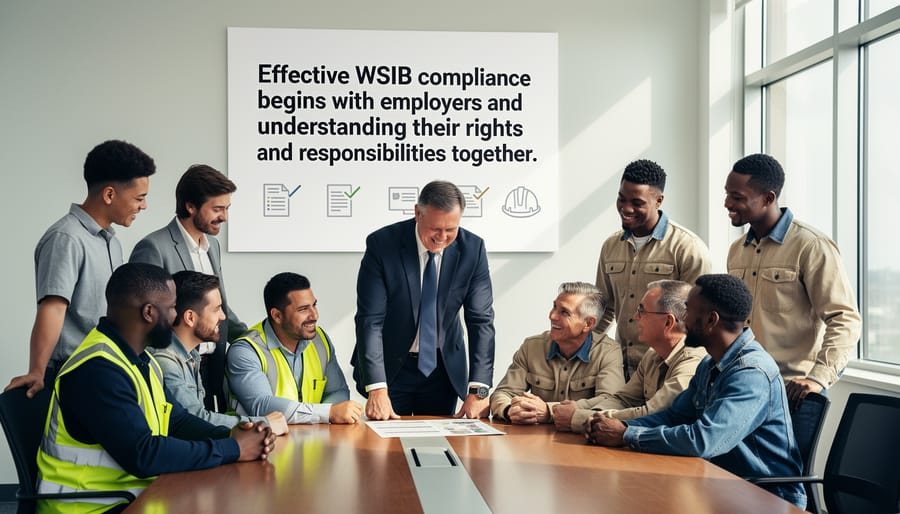
WSIB Coverage and Registration Requirements
Who Must Register
Understanding who must register with the Ontario Workplace Safety & Insurance Board is essential for maintaining compliance and protecting your workforce. Most Ontario employers fall under mandatory registration requirements, regardless of business size or sector.
Registration is compulsory for all employers who hire workers in industries covered by the Workplace Safety and Insurance Act. This includes construction, manufacturing, healthcare, retail, hospitality, and transportation sectors. Even businesses with a single employee generally require registration, making workforce size largely irrelevant for mandatory coverage.
Certain industries face automatic coverage. Construction businesses must register immediately upon hiring their first worker, with no exceptions. Similarly, employers in designated high-risk sectors cannot opt out of coverage, ensuring workers have access to benefits and experience rating programs that incentivize safety improvements.
Some exceptions exist for specific worker categories. Independent operators, sole proprietors, and certain partnership arrangements may qualify for optional insurance rather than mandatory coverage. However, most incorporated businesses must register regardless of their corporate structure.
Employers should verify their registration status promptly, as operating without required coverage exposes organizations to significant penalties, retroactive premiums, and legal liability. Contact the Ontario Workplace Safety & Insurance Board directly if your industry classification or coverage obligations remain unclear, ensuring you meet all regulatory requirements from day one.
Optional Coverage Scenarios
While the Ontario Workplace Safety & Insurance Board mandates coverage for most employers and their workers, certain business categories fall outside automatic coverage requirements. Understanding when you can elect optional coverage—and why you might choose to do so—is essential for comprehensive workplace protection.
Sole proprietors, partners in partnerships, and executive officers of corporations are typically not required to carry WSIB coverage for themselves. Independent operators, certain real estate professionals, and some agricultural workers may also be exempt from mandatory coverage. However, these individuals and businesses can voluntarily apply for WSIB insurance to protect themselves against workplace injuries and occupational diseases.
Optional coverage provides significant advantages. First, it ensures financial protection if you’re injured while working, covering medical expenses and lost income that might otherwise devastate your business finances. Second, it demonstrates your commitment to workplace safety when bidding on contracts, as many clients and general contractors require proof of WSIB coverage from all workers on their projects, regardless of employment status.
For businesses that employ both mandatory and optional-coverage workers, securing voluntary insurance creates consistency in your safety program and claims management processes. It also protects you from potential lawsuits, as WSIB coverage generally prevents workers from suing their employer for workplace injuries.
To apply for optional coverage, contact the WSIB directly through their website or call their employer hotline. The application process requires business documentation and information about your operations. Premium rates for optional coverage are calculated using the same industry classification system that applies to mandatory coverage, ensuring fair and transparent pricing based on your specific business activities and risk profile.
Premium Calculation and Rate Management
Understanding Your Rate Group
The Ontario Workplace Safety & Insurance Board classifies employers into rate groups based on their industry sector and associated workplace injury risks. This classification system, known as the Classification Structure, organizes businesses into approximately 155 distinct rate groups, each assigned a specific premium rate that reflects the historical claims costs and injury frequency within that sector.
Your rate group determination depends on your primary business activity—the operation that generates the majority of your revenue or occupies most of your workforce. For example, a construction company specializing in framing will fall into a different, typically higher-risk rate group than an office-based architectural firm, even though both operate within the construction industry.
Premium rates vary significantly across rate groups. High-risk sectors like construction, manufacturing, and transportation typically face higher rates due to elevated injury frequency and severity. Conversely, lower-risk industries such as professional services, finance, and retail operations generally pay reduced premiums.
Understanding your assigned rate group is essential for accurate premium calculations and budget planning. If your business activities change or you believe your classification is incorrect, you can request a review through the Ontario Workplace Safety & Insurance Board. Proper classification ensures fair premium assessments while maintaining the system’s sustainability across all Ontario employers.
Experience Rating Programs
The Ontario Workplace Safety & Insurance Board uses experience rating programs to incentivize workplace safety improvements by adjusting employer premiums based on their claims performance. Understanding these programs is essential for managing your WSIB costs effectively and demonstrates your organization’s commitment to creating safer workplaces.
The New Experimental Experience Rating (NEER) program applies to most Schedule 1 employers in Ontario. Under NEER, your workplace’s claims costs are compared to other employers in your rate group over a four-year period. If your claims costs are lower than the average for your industry classification, you receive a rebate on your premiums. Conversely, higher-than-average claims costs result in a surcharge. The NEER adjustment can range from a maximum rebate of the lesser of your premiums or $10,000, to a maximum surcharge of $40,000, creating significant financial incentive for safety performance.
The CAD-7 (Certificate of Clearance) program targets larger employers with annual premiums exceeding $25,000. This program evaluates your claims experience over three years, with potential adjustments ranging from a 100 percent rebate to a 100 percent surcharge on your premiums. CAD-7 calculations consider both the frequency and severity of workplace injuries, making comprehensive safety programs particularly valuable.
Both programs use a three-year reporting lag, meaning your current year’s adjustment reflects claims from previous years. This timeline underscores the importance of immediate action on safety improvements, as benefits accrue over time.
To optimize your experience rating, focus on injury prevention, prompt accident reporting, and effective return-to-work programs. Track your claims costs regularly and compare them against your rate group average. Consider working with occupational health and safety consultants to identify risk areas and implement targeted interventions that reduce both injury frequency and severity.
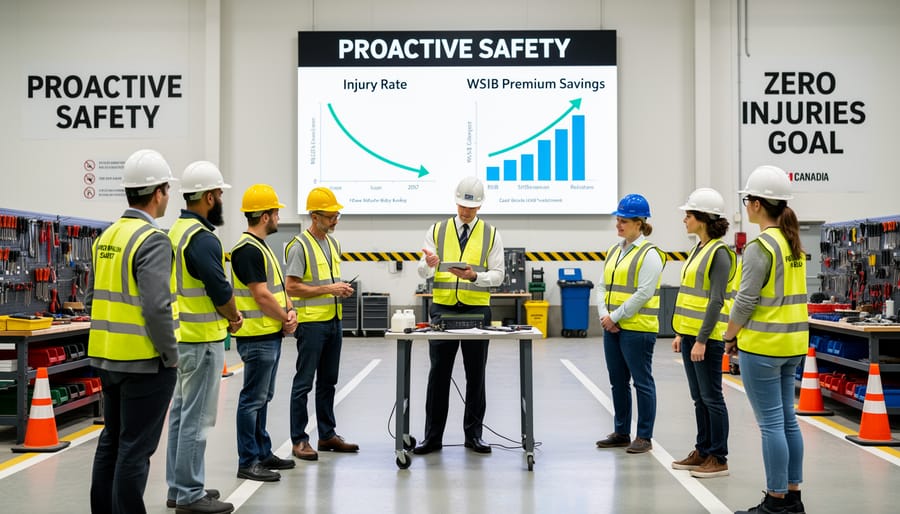
Reporting Requirements and Employer Obligations

When and How to Report Workplace Injuries
Timely and accurate reporting of workplace injuries is a fundamental obligation under Ontario Workplace Safety & Insurance Board regulations. Understanding these critical timelines and documentation requirements protects both your organization and injured workers.
Employers must report all workplace injuries to the WSIB within three days of learning about them. This applies to any injury requiring medical attention beyond basic first aid, resulting in lost time beyond the day of injury, or requiring modified work. The three-day timeline is strictly enforced, and late reporting can result in penalties and complications with claims processing.
To report an injury, complete Form 7 (Employer’s Report of Injury/Disease) through your WSIB online account or by paper submission. Ensure you provide comprehensive details including the worker’s personal information, injury description, circumstances of the incident, and witness statements if applicable. Documentation should include the exact date, time, and location of the incident, along with any immediate actions taken.
Workers have their own reporting responsibility—they must notify their employer immediately and complete Form 6 (Worker’s Report of Injury/Disease) within six months of the injury. As an employer, you should facilitate this process by providing the necessary forms and guidance.
Maintain detailed internal records of all workplace injuries, regardless of whether they meet WSIB reporting thresholds. This documentation proves invaluable during audits, supports your health and safety programs, and demonstrates due diligence. Accurate recordkeeping also assists in identifying workplace hazards and preventing future incidents, ultimately contributing to lower premium costs and a safer work environment.
Penalties for Non-Compliance
Failing to meet your obligations under the Ontario Workplace Safety & Insurance Board can result in significant financial and legal consequences that directly impact your organization’s operations and bottom line. Employers who neglect to register with WSIB when required face substantial penalties, including retroactive premiums calculated from the date registration should have occurred, plus administrative penalties of up to $250,000 and potential director liability.
Non-compliance with reporting requirements carries equally serious repercussions. Late or inaccurate reporting of workplace injuries can result in administrative penalties ranging from $1,000 to $100,000 per violation. The WSIB also imposes interest charges on overdue premium payments at rates that exceed typical commercial lending rates, compounding your financial burden over time.
Employers who fail to maintain accurate payroll records or misclassify workers may face premium adjustments extending back several years, creating unexpected financial liabilities. In severe cases involving willful non-compliance or fraud, the WSIB can pursue prosecution under the Workplace Safety and Insurance Act, resulting in criminal charges against responsible officers.
Beyond monetary penalties, non-compliance damages your organization’s reputation within the industry and may jeopardize business relationships, particularly when tendering for contracts that require proof of WSIB coverage. Implementing robust compliance systems and seeking professional guidance when uncertainties arise represents a practical investment in avoiding these preventable consequences.
Navigating Claims and Return-to-Work Programs
The Claims Process Explained
Once you submit a claim to the Ontario Workplace Safety & Insurance Board, the process follows a structured timeline designed to ensure fair assessment and timely decisions. Understanding this process helps you manage expectations and fulfill your responsibilities effectively.
After receiving a claim, the WSIB typically acknowledges receipt within two business days. The Board then conducts an investigation, which includes reviewing the injury report, medical documentation, and any additional information from both the worker and employer. For straightforward cases, initial decisions usually occur within 10 business days. Complex claims involving disputed circumstances or severity may require additional investigation and take longer.
During the adjudication process, the WSIB may contact you for clarification on workplace conditions, the worker’s job duties, or circumstances surrounding the incident. Responding promptly to these requests prevents delays in claim resolution.
As an employer, you have specific rights within this process. You can object to a claim decision if you believe the injury didn’t occur at work, pre-existing conditions contributed significantly, or the incident doesn’t meet compensability criteria. Objections must be filed within six months of the decision notice, though extensions may be granted in exceptional circumstances.
When submitting an objection, provide clear documentation supporting your position, including witness statements, workplace policies, or medical evidence. The WSIB reviews objections through a reconsideration process, which may involve additional investigation.
Maintaining open communication with the WSIB throughout the claims process demonstrates your commitment to workplace safety while protecting your organization’s interests. Keep detailed records of all correspondence and submitted documentation for future reference.
Building an Effective Return-to-Work Program
An effective return-to-work program is essential for meeting Ontario Workplace Safety & Insurance Board obligations while supporting injured workers and controlling costs. The WSIB expects employers to re-employ workers in suitable roles when medically cleared, making proactive accommodation strategies a compliance necessity.
Start by establishing modified work arrangements before an injury occurs. Develop a roster of temporary or transitional duties that accommodate various restrictions—reduced hours, lighter physical demands, or alternative tasks. This preparation enables quick placement when workers receive medical clearance for modified duties, demonstrating your commitment to early and safe return.
Maintain regular communication with injured workers throughout their recovery. Contact them within two business days of the injury, then establish a consistent check-in schedule. This shows support while keeping you informed of their medical status and return-to-work timeline. Document all communications carefully for WSIB records.
Collaborate closely with healthcare providers to understand functional abilities and limitations. Request detailed information about what tasks the worker can safely perform rather than focusing solely on restrictions. This approach helps identify suitable accommodation options within your workplace.
Monitor compliance with WSIB’s re-employment obligations, which require employers with 20 or more workers to re-employ injured employees who were employed for at least one year before injury. Even smaller employers benefit from voluntary return-to-work programs that reduce claim duration and associated costs.
Track return-to-work outcomes and continuously refine your program based on results. Successful programs reduce lost-time claims, lower premium costs, and maintain workforce productivity while supporting injured workers through recovery.

Recent Changes and Ontario Safety and Health Initiatives Integration
The Ontario Workplace Safety & Insurance Board continues to evolve its programs and policies to better serve employers and workers while aligning with provincial safety objectives. Recent years have brought significant changes that workplace safety professionals should understand to maintain compliance and optimize their safety management systems.
In 2023, the WSIB implemented changes to its Rate Framework modernization initiative, which affects how premium rates are calculated across various rate groups. This restructuring aims to provide more accurate risk-based pricing and better reflects the actual claims costs within specific industries. Employers should review their classification to ensure accuracy, as misclassification can result in overpayment or unexpected premium adjustments.
The Board has also enhanced its focus on mental health claims, introducing streamlined processes for chronic mental stress claims by first responders and other designated workers. These changes recognize the growing awareness of workplace mental health issues and provide clearer pathways for both workers seeking support and employers managing these claims. Safety managers should ensure their return-to-work programs incorporate mental health considerations and that supervisors receive appropriate training.
WSIB programs now demonstrate stronger integration with requirements under the Occupational Health and Safety Act (OHSA). The Board collaborates closely with the Ministry of Labour, Immigration, Training and Skills Development to promote proactive safety culture. This partnership manifests through coordinated inspections, shared data on high-risk workplaces, and aligned enforcement priorities. Employers benefit from understanding this relationship, as robust OHSA compliance often translates to reduced WSIB claims and lower premiums.
Recent digital transformation initiatives have improved employer access to WSIB services. The enhanced online portal provides real-time premium statements, simplified claims reporting, and easier access to historical data. These tools enable safety professionals to track trends, identify emerging risks, and demonstrate the value of prevention investments to senior leadership.
Staying current with these changes ensures your organization remains compliant while leveraging available resources to create safer workplaces and manage insurance costs effectively.
Navigating the Ontario Workplace Safety & Insurance Board requirements effectively is not merely a regulatory obligation—it represents a strategic investment in your organization’s long-term sustainability and workforce well-being. Proactive WSIB compliance shields employers from costly penalties, reduces premium burdens, and most importantly, creates safer work environments where employees can thrive without unnecessary risk.
The financial benefits of robust safety programs extend far beyond avoiding fines. Employers who prioritize injury prevention and early return-to-work initiatives consistently experience lower insurance premiums, reduced absenteeism, and improved productivity. More significantly, these efforts demonstrate genuine commitment to worker welfare, fostering trust and engagement that translates into stronger organizational culture and retention.
To optimize your relationship with the Ontario Workplace Safety & Insurance Board, begin by conducting a comprehensive audit of your current compliance status. Review your workplace classification, ensure your payroll reporting is accurate, and verify that all required safety policies are current and actively implemented. Develop clear protocols for incident reporting and claims management, and establish partnerships with healthcare providers who understand return-to-work accommodation requirements.
Invest in ongoing training for supervisors and safety committee members, keeping them informed of regulatory updates and best practices. Consider engaging occupational health and safety consultants to identify gaps in your programs and leverage available WSIB resources, including premium discount programs and workplace safety grants.
Taking these concrete steps positions your organization as a leader in workplace safety while protecting both your employees and your bottom line.