
THCA in the Workplace: What Canadian Employers Must Know Before It’s Too Late
THCA (tetrahydrocannabinolic acid) is the non-intoxicating precursor to THC found in raw cannabis, but it converts to psychoactive THC through heat, making THCA joints and similar products a workplace safety concern that many Canadian employers are unprepared to address. When employees smoke or vape THCA products, they experience the same impairing effects as traditional cannabis, yet these products often exist in a legal grey area that complicates policy enforcement and testing protocols.
The challenge for safety professionals is twofold. First, THCA products are sometimes marketed as hemp-derived or legally distinct from cannabis, creating confusion about their status under Canadian law and workplace drug policies. Second, standard cannabis testing methods can’t distinguish between THCA consumption and THC consumption, meaning your existing drug testing program may already capture these products without you realizing it, or it may miss critical impairment risks depending on your testing approach.
For workplaces with safety-sensitive positions, ignoring THCA products isn’t an option. The substance produces measurable impairment that affects reaction time, decision-making, and coordination. Your obligation under provincial occupational health and safety legislation remains unchanged: you must take reasonable precautions to protect workers from foreseeable hazards, including impairment from any source.
This article clarifies what THCA is, explains how Canadian law applies to these products in workplace contexts, and provides practical guidance for updating your policies, testing programs, and employee communications. Whether you’re revising an existing cannabis policy or building one from scratch, you’ll gain the technical knowledge and compliance framework needed to address THCA products effectively within your organization’s safety management system.
Understanding THCA: Why It Matters for Workplace Safety
THCA, or tetrahydrocannabinolic acid, is the raw, non-psychoactive precursor compound found in fresh cannabis plants. Unlike THC (delta-9-tetrahydrocannabinol), which produces the intoxicating effects associated with cannabis use, THCA itself doesn’t cause impairment in its natural state. This distinction has led to aggressive marketing of THCA flower and pre-roll products as a legal alternative to traditional cannabis, creating confusion among consumers and employers alike.
The critical issue for workplace safety lies in what happens when THCA is used. Through a process called decarboxylation, THCA converts into psychoactive THC when exposed to heat. This conversion occurs instantly when someone smokes or vaporizes THCA flower or pre-rolls. Light a THCA pre-roll, and you’re combusting material that becomes THC as it burns. The result is identical to smoking regular cannabis: immediate psychoactive effects that impair judgment, coordination, reaction time, and cognitive function.
- THCA (Tetrahydrocannabinolic Acid)
- The raw, non-psychoactive cannabinoid acid found naturally in fresh cannabis plants before heat exposure or aging.
- THC (Delta-9-Tetrahydrocannabinol)
- The primary psychoactive compound in cannabis that produces intoxicating effects and impairment, created when THCA is heated.
- Decarboxylation
- The chemical process through which heat converts non-psychoactive THCA into psychoactive THC, occurring during smoking, vaping, or cooking.
- THCA Pre-Rolls
- Pre-rolled cannabis cigarettes marketed as containing THCA flower, which convert to THC immediately upon lighting and produce the same impairment as traditional cannabis.
- Psychoactive Effects
- Changes in perception, cognition, mood, consciousness, or behavior that impair a person’s ability to perform work tasks safely and effectively.
THCA products have surged in popularity partly due to regulatory grey areas and marketing that emphasizes the “non-intoxicating” nature of the raw compound. High-THCA strains and pre-rolls are widely available, often presented as wellness products or legal alternatives. Some consumers genuinely believe these products won’t produce a high, while others appreciate the potency of THCA flower that converts to THC with high bioavailability.
For workplace safety professionals, this creates a dangerous knowledge gap. An employee might claim they only use “THCA, not THC” without understanding that combusting or heating THCA flower delivers the same THC impairment risk at work as any other cannabis product. The method of consumption determines the effect. Whether someone smokes a THCA pre-roll or a traditional cannabis joint, the workplace safety concern remains identical: impaired judgment and motor skills that compromise safety in any environment where alertness matters.
This isn’t a theoretical risk. Workers in safety-sensitive positions like equipment operation, driving, maintenance, or construction face immediate hazards when impaired. The distinction between THCA and THC matters for chemistry discussions but becomes irrelevant the moment combustion occurs.
Your Legal Obligations: Canadian Workplace Safety Requirements
Federal vs. Provincial Jurisdiction
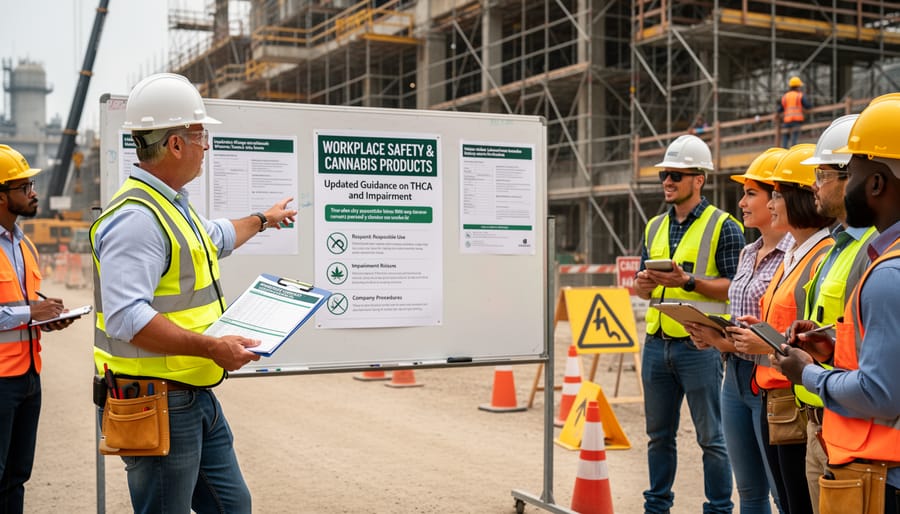
Most Canadian employers fall under provincial or territorial occupational health and safety legislation. Each province has its own OHS Act and regulations, for example, WorkSafeBC in British Columbia or the Alberta OHS Code, which govern workplace safety requirements, including cannabis impairment policies. The provincial system covers the vast majority of workplaces across Canada.
A smaller subset of employers operates under federal jurisdiction, typically organizations in banking, telecommunications, interprovincial transportation, and other federally regulated industries. These workplaces follow the Canada Labour Code, Part II, and guidance from Employment and Social Development Canada.
Cannabis legalization brought no change to OHS Act requirements in any jurisdiction. Your duty to maintain a safe workplace remains identical whether the substance is THCA, THC, alcohol, or any other impairing agent.
To determine which rules apply to your organization, check whether your industry falls under federal oversight. If not, you’re governed by your province or territory. The Canadian Centre for Occupational Health and Safety provides resources for both systems, while your provincial regulator offers jurisdiction-specific guidance on cannabis workplace policies.
The Duty to Accommodate vs. The Duty to Maintain Safety
Balancing human rights obligations with workplace safety is one of the most complex aspects of cannabis management in Canadian workplaces. Under human rights legislation, employers must accommodate employees who use cannabis for medical purposes unless doing so creates undue hardship. This protection extends to THCA products when prescribed or used therapeutically. However, accommodation doesn’t mean unrestricted use.
Your duty to maintain safety takes precedence when impairment would create direct threats to the employee or others. For safety-sensitive positions, you can restrict cannabis use during work hours and establish fitness-for-duty requirements even for medical users. The key is demonstrating that restrictions are bona fide occupational requirements, not blanket policies without justification.
Document your assessment process. Identify which positions genuinely require heightened safety standards and why THCA products pose risks in those roles specifically. When an accommodation request arises, engage in individualized dialogue. Explore whether alternative duties, scheduling adjustments, or modified consumption timing could meet both safety and human rights needs. The goal isn’t choosing between accommodation and safety but finding solutions that respect both obligations where possible.
THCA Pre-Rolls and Workplace Impairment: The Real Risk

Despite marketing that positions THCA products as legal alternatives or non-intoxicating options, the workplace reality is straightforward: when an employee smokes or vapes a THCA pre-roll, they experience the same psychoactive effects as traditional cannabis. The decarboxylation process occurs instantly when THCA is heated, converting it to THC before it enters the lungs. This isn’t a theoretical concern. Workers consuming THCA pre-rolls during breaks or before shifts face identical impairment risks to those using conventional THC products.
The timing and duration of impairment from THCA pre-rolls follows the same pattern as smoked THC cannabis. Peak effects typically occur within 10 to 30 minutes of consumption, with noticeable impairment lasting two to four hours. However, residual effects on complex cognitive tasks, reaction time, and coordination can persist for six to eight hours or longer. For safety-sensitive work requiring precise judgment, manual dexterity, or operation of equipment, this extended window creates significant risk. An employee who smokes a THCA pre-roll during lunch may still be measurably impaired when operating machinery in the afternoon.
Detection presents a particular challenge. Standard workplace drug tests measure THC metabolites, not THCA specifically. Once THCA converts to THC through smoking, it becomes indistinguishable from any other THC source in testing. This means you cannot reliably determine whether a positive test resulted from THCA pre-roll use versus traditional cannabis. More problematically, cannabis metabolites remain detectable long after impairment has subsided, making it difficult to establish whether an employee was actually impaired during work hours.
The marketing of THCA products as legal loopholes or workplace-friendly alternatives is dangerously misleading in occupational contexts. While THCA flower may exist in a regulatory grey area, the moment combustion or vaporization occurs, the distinction vanishes. Employers cannot afford to treat THCA pre-rolls differently than conventional cannabis products when assessing workplace safety risks. The chemical reality overrides the marketing narrative.
Developing Your THCA-Inclusive Workplace Policy
Safety-Sensitive Positions and Zero-Tolerance Standards
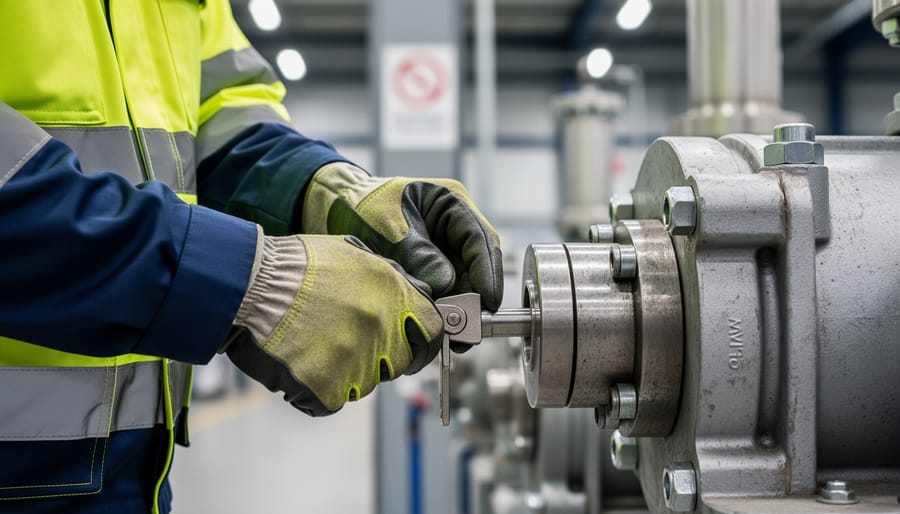
Safety-sensitive positions are those where impairment could cause harm to the worker, colleagues, or the public. These typically include operating heavy machinery, working at heights, handling hazardous materials, driving commercial vehicles, and roles requiring split-second judgment. If a momentary lapse could result in injury or death, the position is safety-sensitive.
For these roles, employers can establish zero-tolerance standards for cannabis use, including THCA products, during work hours and immediately before shifts. This means no consumption of any cannabis product, pre-rolls, edibles, or otherwise, within a specified period before reporting for duty. Many safety-sensitive sectors adopt pre-shift timeframes ranging from eight to twenty-four hours, depending on the role’s risk level and operational requirements.
Document your safety-sensitive position criteria clearly. Base classifications on actual job duties and hazards, not job titles alone. A maintenance supervisor overseeing confined space entry is safety-sensitive; an administrative coordinator in the same department likely isn’t.
Your policy should explicitly name THCA alongside THC to eliminate any “it’s not marijuana” arguments. Since THCA converts to psychoactive THC when heated, consuming THCA pre-rolls creates the same impairment risk as traditional cannabis. Treat them identically in your standards, regardless of how they’re marketed.
Employee Education and Transparency
The most effective THCA workplace policies fail without clear employee education. Workers need to understand that THCA pre-rolls and strains aren’t loopholes in cannabis restrictions, they convert to psychoactive THC when smoked or vaped, creating the same impairment risks as traditional cannabis products.
Start with plain-language explanations during policy rollout. Define THCA in terms employees can grasp: a precursor compound that becomes intoxicating THC through heat. Explain specifically why pre-rolls pose workplace risks even when marketed as legal hemp products. Many workers assume THCA products are safe for work because they’re widely available or advertised as non-intoxicating in their raw form.
Address the timing question directly. Employees should know that THCA’s effects begin immediately upon combustion and can impair judgment, reaction time, and motor skills for hours, well into a work shift. Provide concrete examples relevant to your industry: operating machinery, driving, working at heights, or handling hazardous materials.
Transparency builds buy-in. Explain the legal foundation for your policy, that Canadian occupational health and safety legislation requires employers to maintain safe workplaces regardless of cannabis legalization. Frame restrictions as protecting everyone on site, not punitive measures.
Use multiple communication channels: in-person sessions, written materials, and regular reminders. Supervisors need training to recognize impairment signs and respond consistently. Create accessible channels for questions, because confusion about THCA products is widespread even among safety-conscious workers.
Testing Challenges and Practical Solutions
Standard drug testing presents a frustrating reality for employers: most workplace tests cannot distinguish between THCA and THC, or determine when consumption occurred. A worker who used a THCA pre-roll three weeks ago may test positive, while someone who consumed yesterday could show similar results. This makes traditional testing an unreliable indicator of current impairment and creates legal challenges for employers who rely solely on test results to make disciplinary decisions.
Urine tests, the most common screening method, detect THC metabolites that remain in the system long after psychoactive effects have worn off. They tell you if someone has used cannabis recently, not if they are impaired at work. Blood tests offer a shorter detection window but require invasive collection and lab analysis, making them impractical for routine workplace use. Saliva tests can detect recent use more accurately, but their reliability with THCA products specifically remains unclear as these formulations become more widespread.
Given these limitations, successful business safety practices must layer multiple approaches. Reasonable cause testing, triggered by observable signs of impairment rather than random screening, provides stronger legal footing and focuses resources where safety concerns actually exist. Train supervisors to recognize impairment indicators: changes in coordination, reaction time, decision-making ability, speech patterns, or unusual behavior inconsistent with the worker’s normal performance.
Fitness-for-duty assessments offer another practical tool, especially for safety-sensitive roles. These evaluations measure actual performance on job-relevant tasks, such as reaction time tests or coordination assessments, establishing a baseline for each worker and flagging deviations that suggest impairment regardless of cause. This approach protects workers taking prescription medications while identifying those whose abilities are compromised.
Your policy should integrate these methods with broader protocols covering PPE and protection and mandatory workplace training on recognizing impairment. Document your assessment procedures clearly, apply them consistently, and focus on observable behavior and performance rather than attempting to prove consumption timing through testing alone.
Industry-Specific Considerations

THCA-related impairment creates distinct hazards across different sectors, and your approach must account for these operational realities. Construction sites involve heavy machinery, work at heights, and constantly changing hazard profiles where a single lapse in judgment can be fatal. Manufacturing environments combine repetitive tasks with equipment that demands sustained attention. Transportation operations require split-second decision-making at highway speeds. Each sector needs controls matched to its specific risk profile.
| Sector | Primary THCA Risks | Control Measures |
|---|---|---|
| Construction | Equipment operation, fall hazards, coordination with multiple trades | Pre-shift assessments, clear zero-tolerance for safety-sensitive roles, immediate removal protocols |
| Maintenance | Lock-out/tag-out procedures, confined spaces, emergency response readiness | Fitness-for-duty checks before critical tasks, documented observation protocols |
| Transportation | Vehicle operation, sustained attention, reaction time requirements | Random testing programs, clear return-to-work processes, third-party assessment |
| Manufacturing | Machinery interaction, quality control, repetitive precision tasks | Reasonable cause provisions, supervisor training on impairment indicators |
The Canadian Centre for Occupational Health and Safety provides foundational guidance that applies across all sectors, but you need to translate general principles into sector-specific protocols. For construction, this means integrating THCA considerations into existing construction safety materials and pre-job hazard assessments. Your supervisors must recognize impairment signs specific to the tasks workers perform on that site.
Transportation presents unique challenges because impairment may not manifest until a critical moment. Your policy should specify minimum time requirements between THCA use and operating vehicles, even if an employee appears functional. WorkSafeBC guidance on cannabis processing safety offers useful frameworks for industries where cannabis products themselves are handled, but the impairment principles apply universally.
Manufacturing and maintenance operations benefit from clear triggers for reasonable cause assessment. Define observable behaviors that warrant removal from duty: difficulty following multi-step procedures, coordination problems, unusual errors in routine tasks. These sectors often involve high-risk safety management protocols that should explicitly include THCA alongside other impairing substances.
Document your sector-specific controls and train supervisors to apply them consistently. A construction crane operator and a transport driver face different immediate hazards, but both require the same foundational commitment to a workplace free from impairment caused by THCA products.
Resources and Next Steps for Employers
Start by reviewing your current workplace cannabis policy today. If you lack a formal policy or haven’t updated it since 2018, addressing THCA products should be your immediate priority. Begin with a policy audit: identify gaps in your existing documentation, assess whether safety-sensitive positions are clearly defined, and determine if your policy language explicitly covers all cannabis products including THCA.
The Canadian Centre for Occupational Health and Safety (CCOHS) offers comprehensive guidance for developing workplace cannabis policies. Their resources include template policies, fact sheets on cannabis impairment, and sector-specific considerations. Federally regulated employers should consult Labour Program guidance on cannabis in the workplace, while provincially regulated organizations must reference their jurisdiction’s occupational health and safety regulator. WorkSafeBC provides detailed guidance for high-risk industries, particularly construction and manufacturing sectors where THCA use poses significant safety concerns.
Provincial regulators across Canada maintain cannabis-specific workplace resources. Contact your jurisdiction’s occupational health and safety branch to confirm compliance requirements and access region-specific tools. Many provinces offer consultation services to help employers navigate policy development and implementation.
Consider engaging an occupational health and safety professional with cannabis expertise to review your approach. These specialists understand both the technical aspects of cannabis products like THCA and the legal framework governing workplace safety. They can conduct workplace assessments, develop tailored policies, and provide employee training that reflects your specific operational risks.
Document every step of your policy development and implementation process. This documentation demonstrates due diligence should workplace incidents occur. Schedule policy reviews at least annually, given how rapidly cannabis products and consumption methods evolve. THCA represents just one emerging challenge in this space.
THCA products represent a significant evolution in workplace cannabis challenges, not a loophole that exempts employers from their safety obligations. The distinction between THCA and THC matters scientifically, but when heated, as happens with pre-rolls and most consumption methods, that distinction vanishes the moment combustion occurs. Employers who treat THCA as something fundamentally different from traditional cannabis products are exposing themselves to preventable risks.
Proactive policy development isn’t just about compliance. It protects your workers from impairment-related incidents, shields your organization from liability, and demonstrates that you take your duty to provide a safe work environment seriously. As per Occupational Health and Safety legislation across Canada, employers have a duty to provide a safe work environment and take all reasonable precautions. That duty applies equally whether an employee consumed delta-9 THC flower or a THCA pre-roll marketed as “non-psychoactive.”
The cannabis landscape continues to evolve. New products, delivery methods, and marketing approaches emerge regularly. What remains constant is your responsibility as an employer to assess risks, implement appropriate controls, and ensure workers understand expectations. Don’t wait for an incident to force policy updates. Review your workplace cannabis policies now, explicitly address THCA products if you haven’t already, and commit to ongoing monitoring as this area develops. The Canadian Centre for Occupational Health and Safety and provincial regulators provide guidance, but ultimately the responsibility for a safe workplace rests with you.