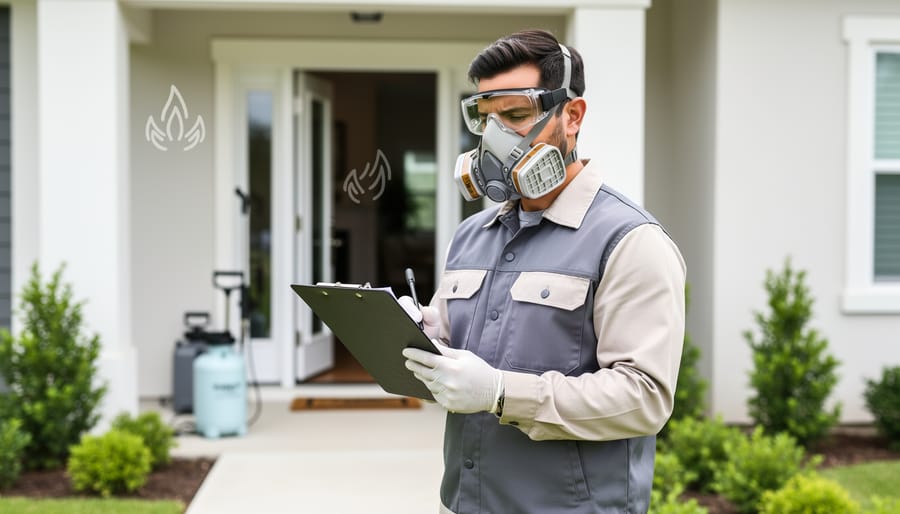
How to Obtain a Pest Treatment Safety Clearance Before Selling Your Property
Obtaining a pest treatment property safety clearance requires a licensed pest control operator to verify that a treated property is free of active infestations and that chemical residues have dissipated to safe levels, typically within 24 to 72 hours of treatment depending on the products used and ventilation conditions. Anyone selling a house by auction faces unique considerations regarding how infestations impact real estate transactions and why proper clearance procedures matter. For property transactions, this clearance serves as formal documentation that the building meets health and safety standards for occupancy and transfer, protecting both the seller from liability and the buyer from unknowingly acquiring a compromised property.
The clearance process involves more than simply exterminating pests. It encompasses pre-treatment risk assessments, occupancy restrictions during and after application, air quality testing when required, and written certification from qualified professionals. In commercial settings, workplace safety regulations add another layer: employers must ensure that workers re-entering treated spaces face no exposure risk, which means coordinating with occupational health teams and documenting compliance with jurisdictional safety codes.
Most clearance delays stem from incomplete documentation, premature re-entry, or confusion over who holds authority to issue the certificate. Understanding the regulatory framework, preparing the correct paperwork, and following a structured verification protocol will help you secure clearance efficiently and meet your legal obligations before closing a sale or resuming operations.
Understanding Post-Treatment Safety Clearance Requirements
Post-treatment safety clearance in Canada operates under a dual regulatory framework combining federal pesticide regulations and provincial occupational health and safety legislation. At the federal level, Health Canada’s Pest Management Regulatory Agency establishes re-entry intervals and safety protocols for pesticide use, while provinces enforce workplace safety standards and clearance procedures through their respective occupational health and safety acts. This layered approach means sellers must satisfy both pesticide safety requirements and workplace protection obligations, particularly for commercial properties where employees or contractors will occupy the space after treatment.
Three categories of professionals can issue pest treatment safety clearances, each with distinct credentials and authority. Licensed pest control operators holding valid provincial licenses can certify that treatment protocols were followed and mandatory waiting periods completed. Certified industrial hygienists (CIH) are qualified to conduct air quality assessments and issue clearances based on environmental sampling results. Occupational health and safety professionals with appropriate training can evaluate workplace re-entry conditions for commercial properties, ensuring compliance with workplace safety training standards and provincial regulations.
Residential property clearances generally require basic documentation from the pest control company confirming treatment completion and safe re-entry, while commercial properties demand comprehensive clearance procedures including written hazard assessments, air quality testing results, and formal certification that the space meets occupational exposure limits. Provincial variations affect these requirements significantly: Ontario mandates formal clearance documentation for commercial properties under its Occupational Health and Safety Act, while British Columbia requires WorkSafeBC notification for certain commercial treatments. Quebec enforces strict documentation requirements through the CNESST, particularly for multi-unit residential and commercial buildings. Alberta’s approach focuses on professional accountability, requiring certified operators to provide detailed clearance records but allowing more flexibility in the certification process itself.
Tools, Documentation, and Materials Required
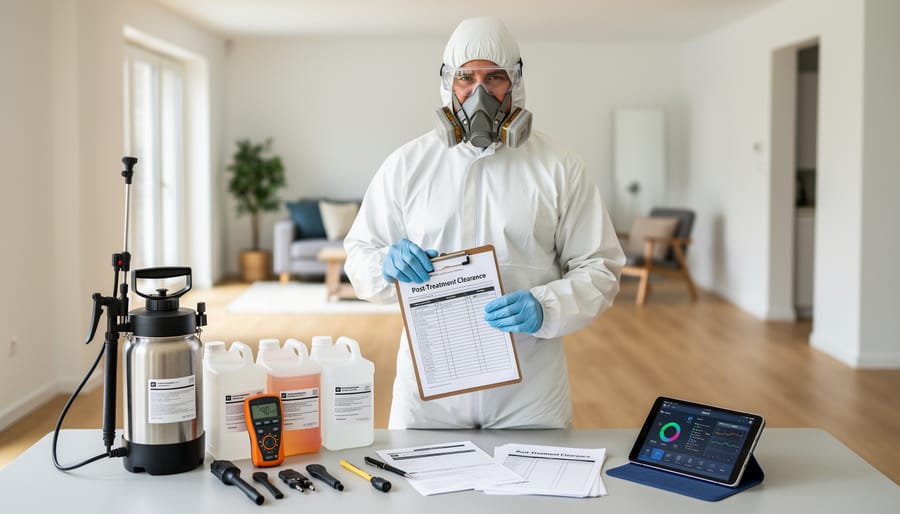
Obtaining a pest treatment safety clearance requires assembling a comprehensive documentation package and ensuring access to specific testing materials. Sellers must collect these items systematically to satisfy legal requirements and facilitate a smooth property transfer.
Essential Documentation and Materials
The clearance process requires collecting multiple documentation types from various sources:
- Complete pest treatment records including application dates, products used, concentrations, and targeted areas
- Material Safety Data Sheets (SDS) for all pesticides and chemicals applied during treatment
- Air quality testing results showing pesticide residue levels, volatile organic compounds (VOCs), and particulate measurements
- Professional certifications proving the pest control operator holds current licensing in your province
- Detailed safety checklists documenting ventilation procedures, re-entry protocols, and hazard assessments
- Official clearance certificate template meeting provincial regulatory standards
Sellers should request detailed treatment reports from their pest control contractor immediately after service completion. These reports must specify waiting periods, ventilation requirements, and any special precautions based on the chemicals deployed. For commercial properties, additional documentation includes worker exposure assessments and confirmation that the treatment complies with occupational health and safety regulations.
Property lawyers typically require original signed clearance certificates, laboratory test results from accredited facilities, and proof of contractor insurance. Keep digital and physical copies of all records, as buyers’ legal counsel will verify documentation completeness before closing. Missing or incomplete records can delay transactions by weeks while replacement documentation is obtained and additional testing is arranged.
Critical Safety Warnings and Stop Conditions
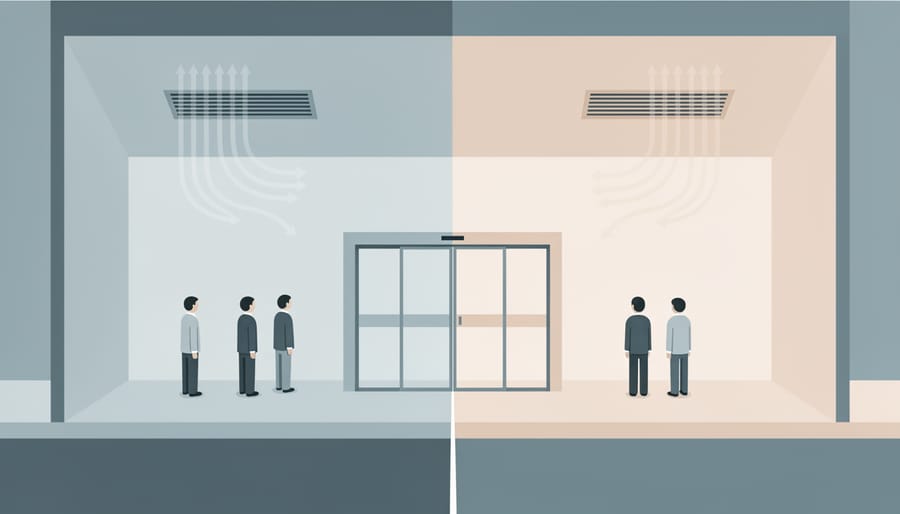
Never proceed with clearance if anyone reports headaches, dizziness, nausea, or respiratory irritation after re-entering the treated space. These symptoms indicate unsafe chemical exposure and require immediate evacuation, extended ventilation, and possible retesting before any further occupancy or clearance attempts.
Mandatory waiting periods vary by pesticide class and application method. Standard pesticide re-entry intervals range from four hours for low-toxicity products to 72 hours or longer for fumigants and organophosphates. Your pest control operator must provide specific re-entry times based on the chemicals used; do not guess or assume shorter periods to accelerate the sale timeline. Commercial properties require additional consideration for worker safety, and employers must enforce proper PPE for any personnel conducting inspections during marginal periods.
Stop the clearance process immediately if you observe visible chemical residue on surfaces, detect strong chemical odours beyond faint traces, find inadequate ventilation (sealed or malfunctioning HVAC systems), or lack complete treatment records specifying products and concentrations used. For commercial properties, implementing safe business practices means delaying clearance rather than exposing workers or future occupants to potential harm. Sellers who rush clearance face liability for health effects, potential negligence claims, and transaction failure when buyers’ environmental assessments reveal unsafe conditions.
Never permit children, pregnant individuals, or chemically sensitive persons to enter during the waiting period, even briefly. Commercial sellers must post clear signage, restrict access through physical barriers, and document compliance with re-entry restrictions to protect against occupational health violations.
Step-by-Step Process to Obtain Your Safety Clearance
Step 1: Confirm Treatment Completion and Waiting Periods
Start by requesting a written completion report from your pest control operator immediately after treatment. This document must include the treatment date, specific pesticides applied (with registration numbers), application method, and treated areas. Verify that all scheduled treatments in the service agreement are complete before proceeding.
Calculate the mandatory waiting period by cross-referencing the pesticide labels or Safety Data Sheets provided by your contractor. Most residential treatments require 24-72 hours before re-entry, while commercial applications using restricted products may demand 7-14 days. The waiting period starts from the final application, not the first treatment date. Mark your calendar and do not permit property access until this minimum period expires. For fumigation treatments, waiting periods typically extend to 48 hours minimum with mandatory aeration and air testing before clearance can begin.
Step 2: Conduct or Arrange Air Quality and Surface Testing
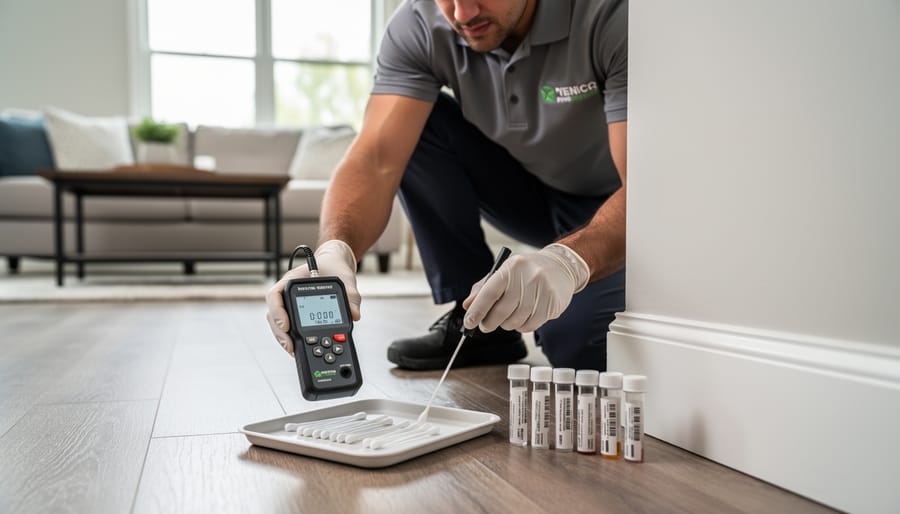
Air quality and surface testing becomes mandatory when fumigants, aerosol foggers, or restricted-use pesticides have been applied. Commercial properties and multi-unit residential buildings typically require third-party testing regardless of treatment method, while single-family homes may only need testing after specific chemical applications.
Qualified professionals who can conduct post-treatment testing include certified industrial hygienists (CIH), licensed environmental consultants, and accredited laboratory technicians. Your pest control operator cannot self-certify their own work for commercial clearances.
Key testing parameters include:
– Volatile organic compounds (VOCs): Must measure below 500 µg/m³ for residential spaces
– Pesticide residue levels: Surface wipe samples should show <10 µg/100cm² for organophosphates
– Indoor air exchange rates: Minimum 0.35 air changes per hour post-ventilation
– Airborne particulate matter: PM2.5 levels under 35 µg/m³
Testing typically requires 24-48 hours for laboratory analysis. Request a detailed report showing measurement locations, methods used, and comparison to Health Canada residential exposure guidelines. Properties failing initial testing need additional ventilation and re-testing before clearance.
Step 3: Complete Visual Inspection and Hazard Assessment
After waiting periods and testing, conduct a thorough visual inspection of treated areas. Check that all ventilation systems operated correctly and spaces received adequate air exchange. Look for visible chemical residue on surfaces, floors, counters, and walls should appear clean without powder, film, or discoloration. Verify that applicators removed or properly sealed treated zones and that warning signs came down only after the designated re-entry time. For commercial properties, confirm equipment storage areas and employee workstations show no contamination. Inspect HVAC intakes and filters for residue that could circulate chemicals. Document any concerns with photographs and measurements. If you find unexpected residue, sticky surfaces, or lingering chemical odours, delay the clearance until remediation occurs. This inspection creates the evidence base your certifying professional needs to issue final clearance.
Step 4: Obtain Professional Clearance Certification
After testing confirms the property meets safety standards, you must obtain formal certification from a qualified professional. In Canada, this certification typically comes from a licensed pest control operator holding provincial certification, an occupational hygienist (Certified Industrial Hygienist or ROH designation), or a qualified safety professional with expertise in chemical exposure assessment.
Contact the certifying professional with your complete test results, treatment records, and inspection findings. They will review the documentation, may conduct their own verification inspection, and issue a clearance certificate if standards are met.
The certificate must include: property address, treatment date and chemicals used, testing methodology and results, date of clearance inspection, confirmation that residue levels meet acceptable thresholds, re-entry authorization statement, the professional’s name and credentials, and their signature with certification number. Request digital and physical copies.
For commercial properties, ensure the certifying professional understands workplace safety regulations. The certificate should explicitly state the property is safe for worker occupancy, not just general habitation, as this distinction matters for liability protection during property transfer.
Step 5: Document and Distribute Clearance Records
Once your clearance certificate is issued, immediately make multiple certified copies for distribution. The original goes to your legal counsel, who will attach it to the property transfer documents. Provide copies to the buyer’s legal team, your real estate agent, and the buyer directly for their records. For commercial properties, safety officers and facility management must receive copies to maintain compliance with occupational health and safety documentation requirements.
Retain a copy in your permanent property file for at least seven years, as recommended by most Canadian provinces for liability protection. If the property has tenants, provide them written notice that treatment clearance has been obtained, including a copy of the certificate and details of any ongoing precautions. Document the distribution with a tracking sheet noting who received copies and when, creating an audit trail that protects you from future disputes about disclosure.
Verification and Next Steps After Clearance
Once you receive the clearance certificate, verify it contains all legally required elements before proceeding with the property sale. Check that the document includes the issuing professional’s credentials and license number, the specific treatment date and chemicals used, the clearance date, and confirmation that residue levels meet provincial health and safety standards. The certificate should explicitly state the property is safe for occupancy without restrictions.
Buyers typically have their lawyer or industrial hygienist review the clearance documentation during the due diligence period. They’ll cross-reference the treatment records with the clearance date to confirm proper waiting periods were observed. For commercial properties, buyer representatives may request complete MSDS documentation and chain-of-custody records for air quality samples. Missing or incomplete documentation is the most common cause of closing delays, ensure your pest control operator and clearance professional provide comprehensive records upfront.
Maintain both digital and physical copies of all clearance documents for a minimum of seven years after the sale closes. Provide certified copies to your real estate lawyer, the buyer’s counsel, and any property management companies if applicable. For commercial properties, copies must go to the incoming employer and be filed with workplace safety records.
Post-sale, sellers retain liability for fraudulent concealment but not for properly disclosed treatments with valid clearance. The clearance certificate shifts liability to the issuing professional and establishes your due diligence. If buyers later claim treatment-related issues, your documented clearance process demonstrates reasonable care and regulatory compliance. For commercial properties, proper clearance also protects against worker compensation claims related to residual contamination.
Common Questions About Pest Treatment Safety Clearances
How long does it take to obtain a pest treatment safety clearance?
Timelines vary based on the pesticides used and testing requirements. Most residential clearances are issued within 24 to 72 hours after the mandatory waiting period, while commercial properties requiring air quality testing may take 5 to 10 business days for lab analysis and professional certification.
Who pays for the safety clearance, the seller or buyer?
Sellers typically bear the cost since they’re responsible for delivering a property in safe, transferable condition. However, purchase agreements can stipulate different arrangements, particularly when buyers request additional testing beyond standard clearance requirements.
Can I obtain clearance for a tenant-occupied property?
Yes, but you must provide tenants with proper notice under provincial tenancy laws, ensure they vacate during treatment and waiting periods, and provide them with copies of the clearance certificate before re-entry. Commercial tenants may require clearance documentation for their own occupational health records.
What happens if the property fails clearance testing?
The pest control operator must remediate the issue, which may involve additional ventilation, surface cleaning, or extended waiting periods before re-testing. Sellers remain liable until valid clearance is obtained, potentially delaying closing dates and incurring additional costs.
Multi-unit dwellings present unique challenges because clearance may be required for common areas, individual units, and shared ventilation systems. Condominium corporations often mandate building-wide protocols, and sellers must coordinate with property management to ensure clearance documentation covers their specific unit while addressing any treatment in shared spaces. Commercial buildings face heightened scrutiny since clearances must satisfy not just real estate transfer requirements but also workplace safety regulations protecting employees who will occupy the space. Industrial hygienists typically handle these clearances rather than standard pest control operators, and the documentation must meet provincial occupational health standards. Property sellers should budget additional time and expense for commercial clearances, particularly in sectors with strict safety requirements like healthcare, food service, or manufacturing facilities.
Securing a pest treatment safety clearance before selling your property isn’t just a regulatory checkbox, it’s a critical step that protects everyone involved in the transaction. By following the proper process from treatment completion through professional certification, you safeguard buyers, workers, and future occupants while meeting your legal obligations as a seller.
The clearance process requires careful attention to waiting periods, thorough testing and inspection, proper documentation, and certification by qualified professionals. Taking shortcuts or rushing through these steps exposes you to significant liability and puts others at risk. Commercial property sellers must be especially diligent given the heightened worker safety obligations under occupational health and safety legislation.
Remember that a valid clearance certificate serves two purposes: it enables the legal transfer of your property and confirms that the space meets safety standards for occupancy. The documentation you compile during this process becomes your protection against future claims.
Canadian safety professionals seeking guidance on clearance protocols can access resources through provincial occupational health and safety associations, industrial hygiene organizations, and pest management regulatory bodies. These organizations provide updated standards, training programs, and certification information to ensure clearances meet current requirements in 2026.